The Cobblestones Are Fiber Optic
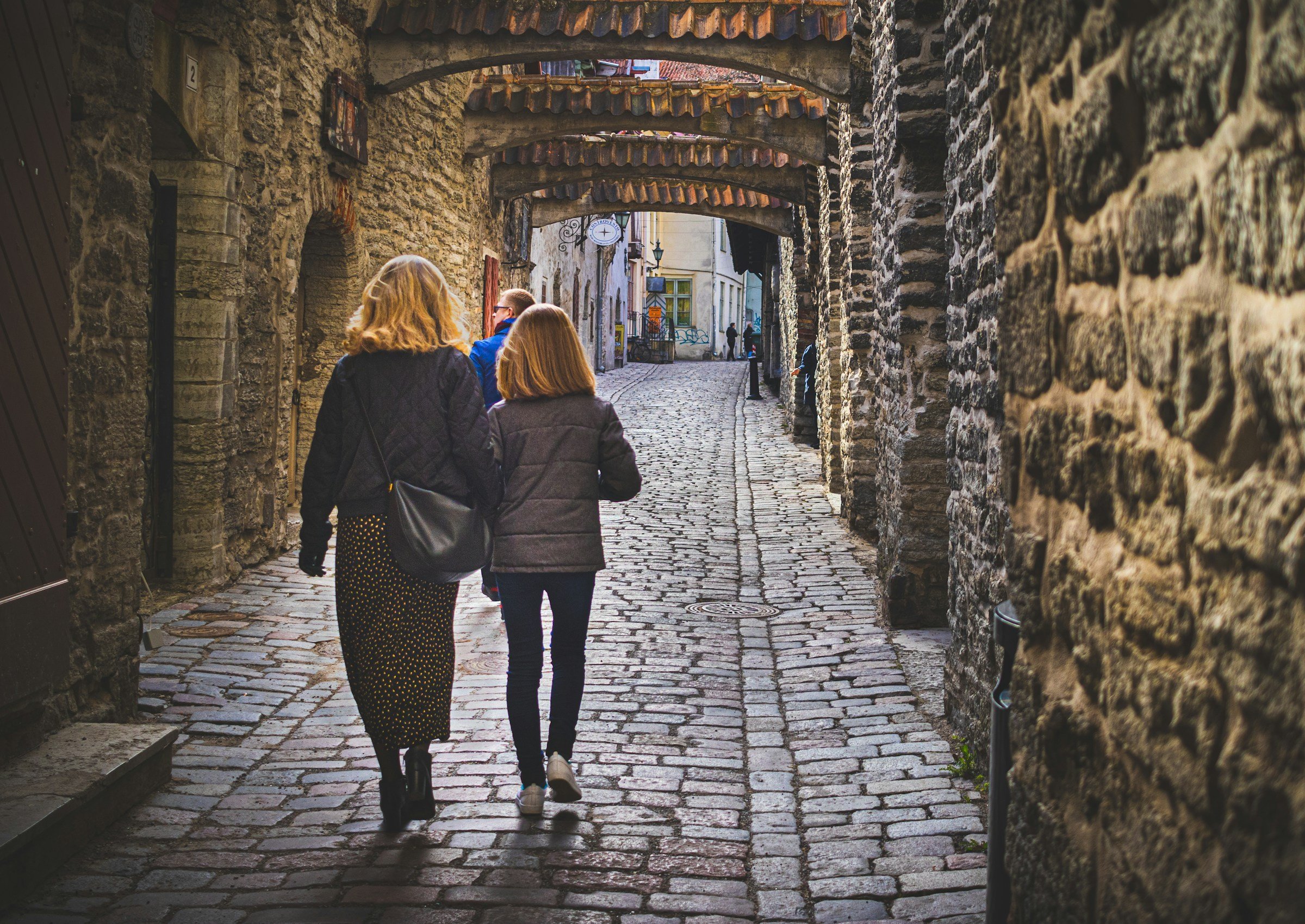
You walk up Pikk Street past guild houses from the 1400s and every third door hides a startup. Not metaphorically. I watched a team debug code in a ground floor office where the stone walls still show guild merchant marks. The medieval city never got flattened for modernist blocks, so tech companies moved into the shells. Bank transfers happen instantly here because Estonia runs on digital infrastructure that treats bureaucracy like legacy code to delete. You register a business online in eighteen minutes, file taxes in three. The Old Town looks like a film set for a period drama, but the Wi-Fi is faster than most airports.

This matters because you will walk these streets expecting a museum and instead find yourself next to locals who never carry cash, never visit a government office in person, and vote from their phones. The medieval architecture is not decor. It is the literal roof over a society that rebuilt itself as a digital state after the Soviet collapse.
Raekoja Plats When the Tourists Leave
The Town Hall Square empties after 8pm in shoulder seasons, and that is when you see the actual city. The cafe terraces fold up. The buskers pack their amps. What remains is a Hanseatic plaza that has hosted markets for six hundred years, now used by teenagers on electric scooters and couples walking dogs. I sat on the steps of the Town Hall pharmacy on a cool evening and watched a group of young Estonians argue about cryptocurrency while sitting exactly where grain merchants once negotiated wheat prices.
The square feels different without the daytime crowds because the buildings stop performing. The pastel facades and Gothic arches are just there, functional, slightly weather-beaten. This is not Bruges. Tallinn locals actually live and work inside the walls. The Old Town has a Rimi supermarket, a hardware store, residential buildings with laundry hanging in courtyards. You hear Estonian, Russian, and English in equal measure, which reflects the city’s layered history better than any guided tour.
The View from Patkuli Is a Lie
Every Tallinn postcard is shot from Patkuli viewing platform on Toompea Hill, looking down at the red rooftops and church spires of the Lower Town. It is gorgeous. It is also misleading. That view shows you a preserved medieval core about eight blocks wide, and it implies that the whole city looks like this. It does not.
Turn around from the platform and you see Soviet-era panel blocks stretching toward Lasnamäe, the massive eastern district where a third of Tallinn lives. Mostly Russian-speaking, mostly concrete high-rises from the 1970s, mostly ignored by tourism marketing. If you ride tram 3 out to Lasnamäe, you pass through the other Tallinn, the one that was built during occupation and still processes that history. The streets are wide, the buildings are identical, and you will not see another tourist.
I am not saying you should skip Patkuli. The view is legitimately stunning at dusk. But understand it as a fragment, not the whole picture. The medieval Old Town is tiny. Most of Tallinn’s 440,000 people live in neighborhoods built after 1950, in architecture that reflects Soviet planning, not Hanseatic trade.
Telliskivi Feels Like Every Creative Quarter, Except It Works

Tallinn
The Telliskivi Creative City is a repurposed industrial complex full of galleries, cafes, vintage shops, and small studios. Yes, it is the same formula you have seen in Berlin, Porto, and Brooklyn. Exposed brick, ironic signage, overpriced coffee. The difference in Tallinn is that the project did not gentrify an existing neighborhood because this area was abandoned rail yards. Nobody got displaced. The rents are still manageable. Local artists actually use the studios instead of getting priced out by pop-up shops.
F-Hoone, the main restaurant and bar, serves Estonian-ish food in a space that was a locomotive depot. The menu changes but expect things like smoked fish, dark bread, pickled vegetables, and beer from small Estonian breweries. A meal runs 15-20 euros, beer 5 euros. The crowd is local twentysomethings, not tour groups. On weekends there is a flea market in the courtyards with Soviet-era cameras, hand-knit woolens, and vintage furniture that someone’s grandmother actually owned.
Telliskivi sits between the Old Town and the Kalamaja neighborhood, both walkable. You can visit without feeling like you are ticking a box on a list of hip districts. It is just a functional creative quarter that happens to work.
The Seaplane Harbour Matters More Than It Should
The Estonian Maritime Museum’s Seaplane Harbour (Lennusadam) is a collection of ships, submarines, and seaplanes in a massive hangar by the port. It sounds niche. It is the best museum in the city.
The reason is the submarine. You can walk through a genuine 1930s Estonian submarine, the Lembit, which served in both the Estonian and Soviet navies. The interior is intact. You see the torpedo tubes, the cramped bunks, the periscope station. Climbing through that sub explains more about Estonia’s compressed and complicated 20th century than any textbook. A country that briefly had its own navy, then was occupied, then had its ships repurposed under Soviet flags, then reclaimed independence and turned one of those subs into a museum exhibit. That arc is Estonia.
Admission is 15 euros for adults, 8 euros for students. The hangar also holds an icebreaker you can board, a mine layer, and seaplanes suspended from the ceiling. If you care at all about maritime history or engineering, plan two hours. If you do not, the submarine alone is worth thirty minutes. Go early or late to avoid school groups.
You Can Walk the City Walls Because Nobody Cares
Sections of Tallinn’s medieval city walls are open to the public, and you can walk along the top between towers. The access points are not obvious. Look for narrow staircases near the Nunne, Sauna, and Kuldjala towers. Tickets cost around 3-5 euros depending on the section. Some parts are only open in summer, but the stairs themselves are accessible most of the year.
Walking the walls is not a polished tourist experience. The stones are uneven. The railings are minimal. In some sections you are just walking along a 700-year-old defensive rampart with a three-story drop on one side. This is what makes it good. You are up there alone or with a handful of other people, looking down at rooftops and courtyards, seeing the city from the angle that medieval guards saw it. No audio guide, no interpretation panels, just stones and views.
The walls make it clear that Tallinn was a working port, not a fairy-tale fantasy. These fortifications were built to protect trade routes and merchant wealth. The towers have gun ports, not decorative windows. The city survived because it was defensible, not because it was pretty. The prettiness was incidental.
If you liked this, you might like: Bratislava, Budapest, Istanbul.
Planning the trip? Compare hotel deals before you book.