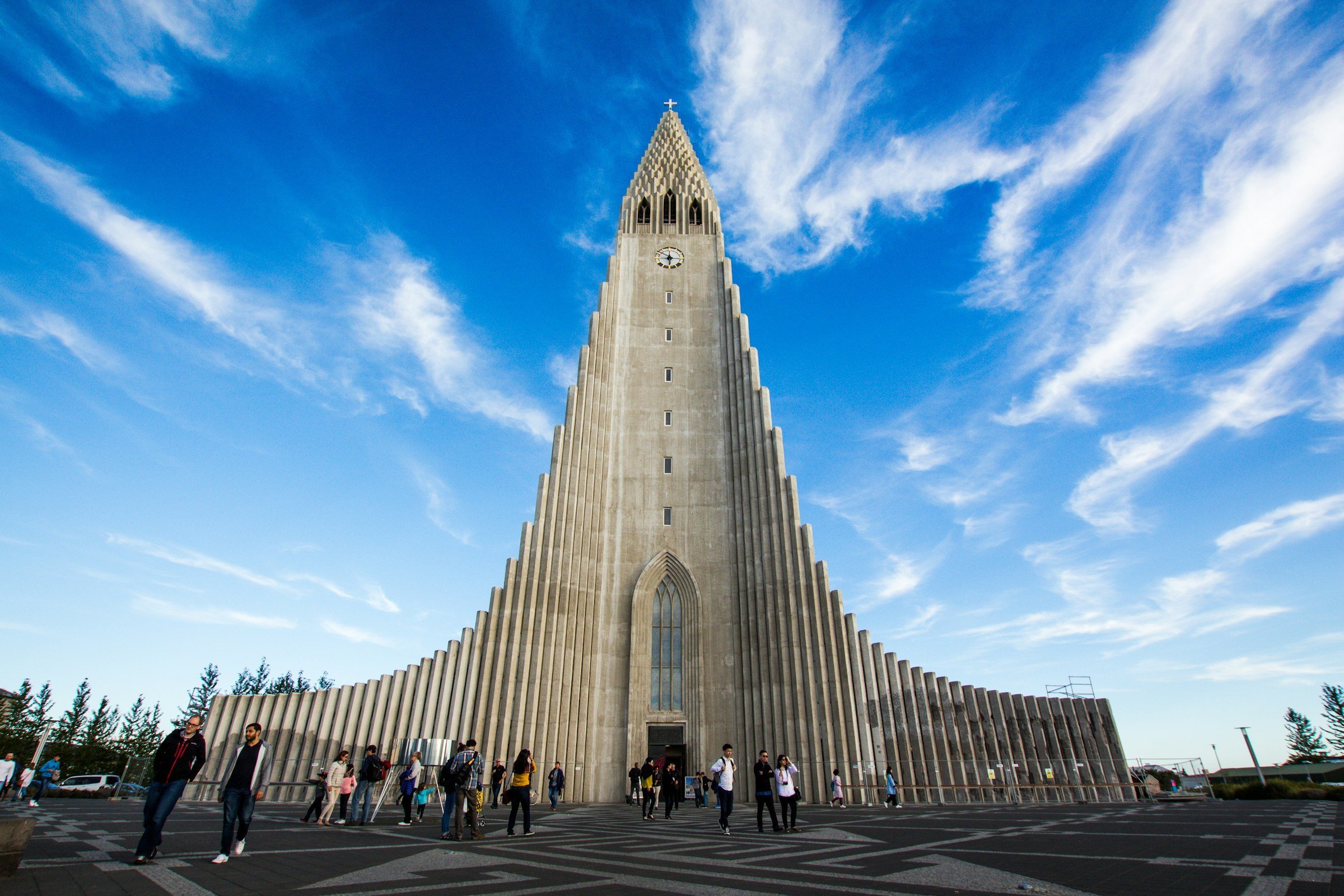
Hallgrímskirkja at Dawn, Whatever Hour Dawn Happens to Be
You start at the church because the light decides when your day begins, not the clock. In deep winter that might be 11am. In summer it might be 3am, and you are awake anyway because darkness never quite arrives. The concrete tower of Hallgrímskirkja catches the first pale glow, and from the observation deck you see how small this capital actually is. Forty thousand people in the core. The whole country fits inside a mid-sized American metro area.

The wind at the top comes straight off the Atlantic. No trees break it. Iceland planted millions of saplings over the last century and most died. What you see from here is lava rock, low scrub, and the skeletal frames of half-built hotels that bet on tourism growth just before the pandemic. The air smells like salt and sometimes like sulfur if the geothermal plants are venting. You descend the tower and walk downhill toward the harbor, passing the Leif Erikson statue that looks more like a Soviet monument than anything Scandinavian.
Laugavegur in Sleet
The main shopping street runs east to west, and it is narrow enough that when tour groups clog the sidewalk you step into the bike lane. Most storefronts sell sweaters with Icelandic horses or puffins on them. The prices are what you expect in a country that imports almost everything and pays dock workers union wages. A wool sweater runs 18,000 króna (about $130). A hotdog costs 600 króna ($4.30).
Sleet here does not fall vertically. It moves sideways at twenty knots and finds the gap between your collar and your scarf. Locals dress in technical outerwear from 66°North, the Icelandic brand that outfitted polar expeditions before it started outfitting German tourists. You will see more Canada Goose jackets than you expect. The store clerks are polite and tired. Tourism doubled in a decade, and Reykjavik has six months of long shifts followed by six months of comparative quiet.
Coffee culture thrives because being indoors with hot liquid is survival. Reykjavik Roasters near Hverfisgata does a light roast that locals argue about. The shop fills by mid-morning regardless of season, and you sit at communal tables with people scrolling phones in Icelandic, Polish, and English. Minimum wage here is around 350,000 króna per month ($2,500), and rent for a one-bedroom apartment in the city center eats half of that. Baristas live in Kópavogur or Hafnarfjörður and bus in.
Harpa and the Old Harbor
The glass concert hall at the waterfront looks like a beached iceberg from certain angles and like a corporate tax dodge from others. It opened in 2011 when Iceland was still crawling out of the banking collapse. The architecture is striking. The acoustics are very good. The plaza outside is windswept and mostly empty except when cruise ships dock and passengers spill out for two-hour layovers.
The old harbor smells like fish guts and diesel. Whaling boats tie up next to tourist catamarans offering puffin-watching tours. You can eat fermented shark at several tourist traps here, and it tastes like ammonia-soaked leather. Anthony Bourdain called it the worst thing he ever put in his mouth, and he was not exaggerating for television. Locals do not eat hákarl unless they are proving a point to a visitor.
Better is the plokkfiskur at one of the lunch counters near the fish market. Mashed fish and potatoes with béchamel, served with dense rye bread. It costs 2,200 króna ($16) and it is what people actually eat when they want comfort food in bad weather. Pair it with malt extract soda if you want the full experience of Icelandic childhood nostalgia.
The Geothermal Veins Under Laugardalur

Reykjavik
You take bus 14 east to Laugardalur, where the public pools are fed by water that comes out of the ground at 80°C (176°F). The system is simple: drill into volcanic bedrock, pipe superheated water into neighborhoods, cool it slightly, and let people soak in it year-round. Laugardalslaug has multiple hot pots at different temperatures, a lap pool, and steam rooms where naked strangers sit in silence because that is what you do.
The entry fee is 1,050 króna ($7.50). Tourists often skip this for the Blue Lagoon, which costs twenty times as much and sits next to a geothermal power plant in a lava field. The Blue Lagoon is turquoise because of silica runoff, and it is genuinely pretty, but it is a branded experience with a gift shop. Laugardalslaug is where teachers go after school and where shift workers soak out the cold before heading home.
You are required to shower naked before entering any pool in Iceland. The locker room attendant will check. This is not negotiable. The stated reason is hygiene. The actual reason is that Icelanders are comfortable with communal nudity and see no reason to accommodate tourists who are not.
Grandi and the Weather as Social Planner
West of the harbor is Grandi, the former industrial zone now filling with breweries and seafood restaurants. Omnom Chocolate has a factory shop here where you can watch them temper single-origin bars. The tasting menu costs 3,500 króna ($25). The neighborhood is walkable when the wind is under thirty knots. Above that, walking becomes a full-body exercise in leaning forward and not getting knocked into parked cars.
Weather determines social plans more than calendars do. Icelanders check the forecast obsessively. Vedur.is is the national weather service site, and it updates radar every ten minutes. Plans are soft until the morning of, and nobody takes offense when you cancel because the wind chill hit -15°C (5°F). The backup plan is usually indoors. Brewpubs like Bryggjan Brugghús fill with people who were supposed to be hiking Esja but decided warmth and beer were better bets.
The local IPA style is aggressively hopped and strong enough that two pints will put you over the legal driving limit. Iceland has zero tolerance laws and breathalyzer checkpoints. A DUI costs you your license, a court date, and about 200,000 króna ($1,450) in fines. Taxis are expensive but not that expensive.
The Light, Again
You end the walk near Perlan, the hot water storage tanks turned museum on Öskjuhlíð hill. The tanks hold geothermal water for the city, and the dome on top offers another view of the same compact grid you saw from Hallgrímskirkja. By now the light has shifted. Maybe it is darker. Maybe it is still bright at 10pm. Your body stops trusting what time means after a few days here.
The thing nobody tells you is how much the light controls mood. Winter depression is real and common. Summer insomnia is just as common. Blackout curtains are standard issue in every apartment. Vitamin D supplements sell out at pharmacies by late autumn. The trade-off for living in a capital this far north is that you stop thinking in days and start thinking in seasons, and the seasons are less about temperature than about how many hours the sun is above the horizon.
If you liked this, you might like: Bratislava, Warsaw, Moscow.