How do people actually ski before work?
The Holmenkollen ski jump sits twenty minutes by metro from Oslo Central Station. When you exit at Holmenkollen station during ski season, you step out into snow. The trails start two hundred meters from the platform. Office workers keep ski gear in their cars or in lockers at Frognerseteren, the trailhead lodge fifteen minutes further up the line. You can be on groomed trails by 7am, ski for ninety minutes, shower at the lodge, and ride back down to be at your desk before 9:30am. This is not weekend recreation. People do this on workdays because the infrastructure assumes you will.
Oslo
The city stops making sense if you do not account for proximity to snow. Nordmarka, the forested plateau north of the city center, has 2,600 kilometers of marked ski trails. The T-bane (metro) Line 1 runs directly from downtown into this network. During winter months, half the passengers on the morning trains carry skis. The other half are used to it. You will see people in suits next to people in race-fit spandex. Nobody comments.
If you visit during peak ski season and wonder why hotels near the center feel half-empty on Saturdays, this is the answer. Locals are either up in Nordmarka or at cabins an hour outside the city. The weekend rhythm adjusts to light and snow cover. You either join it or spend Saturdays in empty cafes wondering where everyone went.
What changes when the fjord gets warm enough to swim?
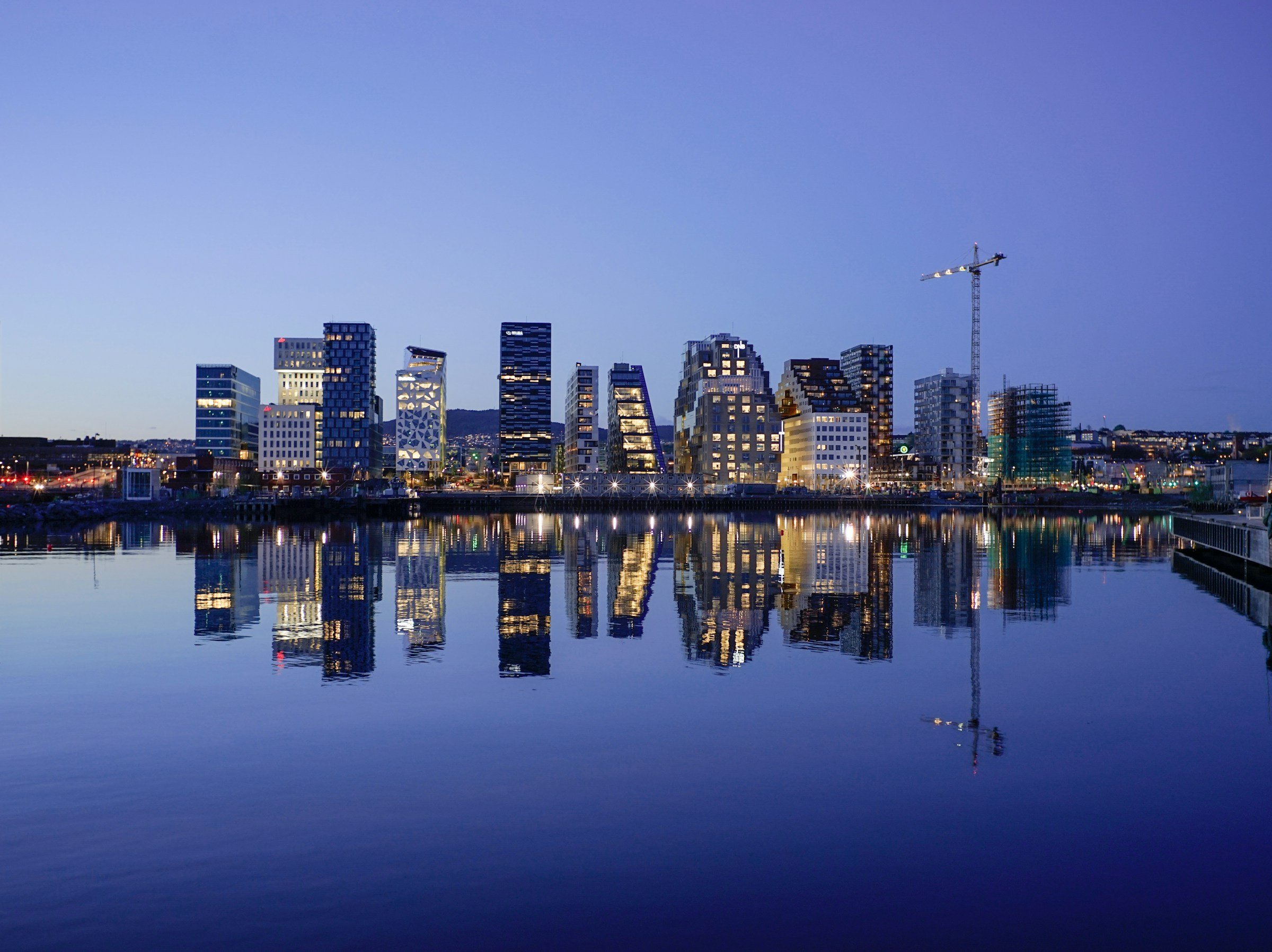
Oslo sits at the head of the Oslofjord, which is not technically a fjord but an inlet. This stops mattering around late spring when the water temperature climbs past twelve degrees Celsius (54°F) and people start swimming off the docks. Sørenga Sjøbad, a harbor bath opened in 2015, has platforms and a small beach within walking distance of the central train station. You can swim before work. You can swim at lunch. Office towers overlook the waterfront, and it is common to see people in swimsuits walking from their desks to the docks and back.
The shift from ski season to swim season happens fast. Early spring is slush and mud. By early summer, every south-facing dock has sunbathers. The city reconfigures around water. Kayaks appear on roof racks. The islands in the inner fjord (Hovedøya, Langøyene, Gressholmen) become weekend destinations, reachable by public ferry for the price of a normal transit ticket (39 NOK, about $3.60 USD). You bring food, a blanket, and expect to spend six hours on a small island with a few hundred other people doing the same thing.
This is not about scenic views or getting away from the city. The islands are fifteen minutes offshore. You can still see downtown. It is about proximity. The same logic that puts ski trails one metro stop from the business district puts swimming holes five minutes by ferry from the docks. Geography dictates that you use both.
Why does everyone have an opinion about cabins?
Oslo
Cabin culture in Norway is not optional socializing. It is assumed infrastructure. If you spend time with locals, someone will invite you to their hytte (cabin). These are not luxury retreats. Many lack running water. Some lack electricity. The point is not comfort but access to terrain. Cabins are base camps. You ski from them in winter, hike from them in summer, and the entire calendar revolves around booking time at them.
Oslo’s position at the inner end of the fjord and the southern edge of Nordmarka means cabins are close. An hour by car puts you in serious wilderness. Two hours puts you in Hemsedal or Geilo, actual ski resorts with lifts. But many families own simpler cabins thirty minutes outside the city. The weekend exodus is real. Friday afternoon traffic heading north and west is backed up because half the city is driving to cabins.
If you ask locals what they did over the weekend and they say “hytte”, they mean they left Oslo. The question is whether they skied, hiked, or just sat by a fire. The activity changes with the season. The habit does not. You either have access to a cabin or you know someone who does. Otherwise you are outside the social structure that organizes free time here.
Is the light situation as bad as people say?
During the darkest stretch of winter, sunrise is around 9am and sunset is around 3pm. The sun stays low even at midday. This is not darkness but dimness, a long blue twilight that lasts most of the day. It affects how people move. Morning commutes happen in the dark. Afternoon commutes happen in the dark. The only daylight is the brief window between 10am and 2pm, which is why lunch breaks get longer and why people leave work to walk even in freezing temperatures. If you do not go outside during that window, you miss the sun entirely.
Office buildings in Oslo have more windows than you expect. This is not architectural preference but survival design. The rooms that matter face south. Break rooms face south. Conference rooms with southern exposure get booked first when daylight is scarce. People will rearrange meetings to get more light.
Summer flips the equation. At the height of the season, the sun rises before 4am and sets after 10pm. Twilight lasts until midnight. Parks stay full until 11pm. Outdoor restaurant seating is packed at 9:30pm. The light does not fade, it just softens. You lose track of time because the sky does not cooperate with clocks. Locals do not sleep much during long daylight stretches. The assumption is that you store daylight like a battery and spend it when winter returns.
What do people actually do with all that access to terrain?
The thing nobody tells you is how casual it is. A five-kilometer ski loop before work is not a fitness achievement. It is maintenance. A swim in the fjord is not a special outing. It is a break. The city assumes you will use the landscape constantly, so it builds infrastructure (heated shelters on ski trails, year-round ferry service to swimming islands, lit paths through Nordmarka for after-work walks) around that assumption.
If you visit and try to treat these activities as weekend excursions, you will miss how they function. They are daily habits that shift with the seasons. You ski in winter because the trails are there and the metro runs to them. You swim in summer because the docks are there and the water is tolerable. The rhythm is not about recreation. It is about living in a city where the boundary between urban space and wilderness is twenty minutes, not two hours. That proximity shapes how weekends, work schedules, and social plans operate. Either you adapt to it or you spend six months wondering why restaurants are empty on Saturday mornings and parks are full at 10pm.
Things to do in Oslo on a first visit
Most of the headline sights sit within one tram ride of the harbor. Six that earn the time, plus one to skip:
- Vigeland installation, Frogner Park. More than 200 sculptures by one artist, Gustav Vigeland. The park is free and open around the clock, so an early summer morning gets you the Monolith before the tour groups arrive.
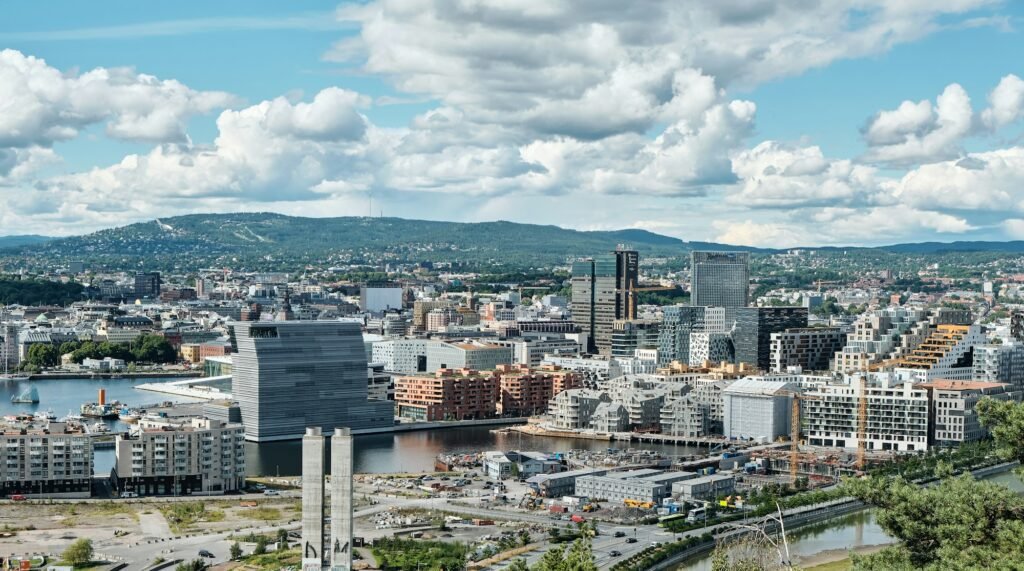
- The Opera House roof. The white marble slopes straight up from the waterline and you can walk to the top without a ticket. The view takes in the fjord and the new Bjørvika waterfront.
- MUNCH. The leaning tower next to the opera opened in October 2021 and holds close to 27,000 Munch works, including three versions of The Scream (MUNCH).
- Nasjonalmuseet. Opened in June 2022 behind City Hall, it is the largest art museum in the Nordic countries (Nasjonalmuseet). The 1893 painted Scream, the version most people picture, hangs here (Nasjonalmuseet).
- Akershus Fortress. Medieval walls above the harbor, an easy walk from Oslo S. The grounds are free and look straight back over the inner fjord.
- Norsk Folkemuseum, Bygdøy. An open-air museum of old farmhouses and a medieval stave church, all relocated from around Norway. Bus 30 runs out to Bygdøy all year, though most outdoor buildings close in winter (Norsk Folkemuseum).
- Skip the Viking Ship Museum for now. It closed in 2021 and is being rebuilt as the Museum of the Viking Age, with opening planned for 1 November 2027 (Museum of the Viking Age). Some Viking finds are on show at the Historical Museum downtown meanwhile.
For an evening, walk up through Grünerløkka along the Akerselva river. The river path runs past old mill buildings and waterfalls, and the walk itself is the point.
If you liked this, you might like: Vilnius, Vienna, Bratislava.