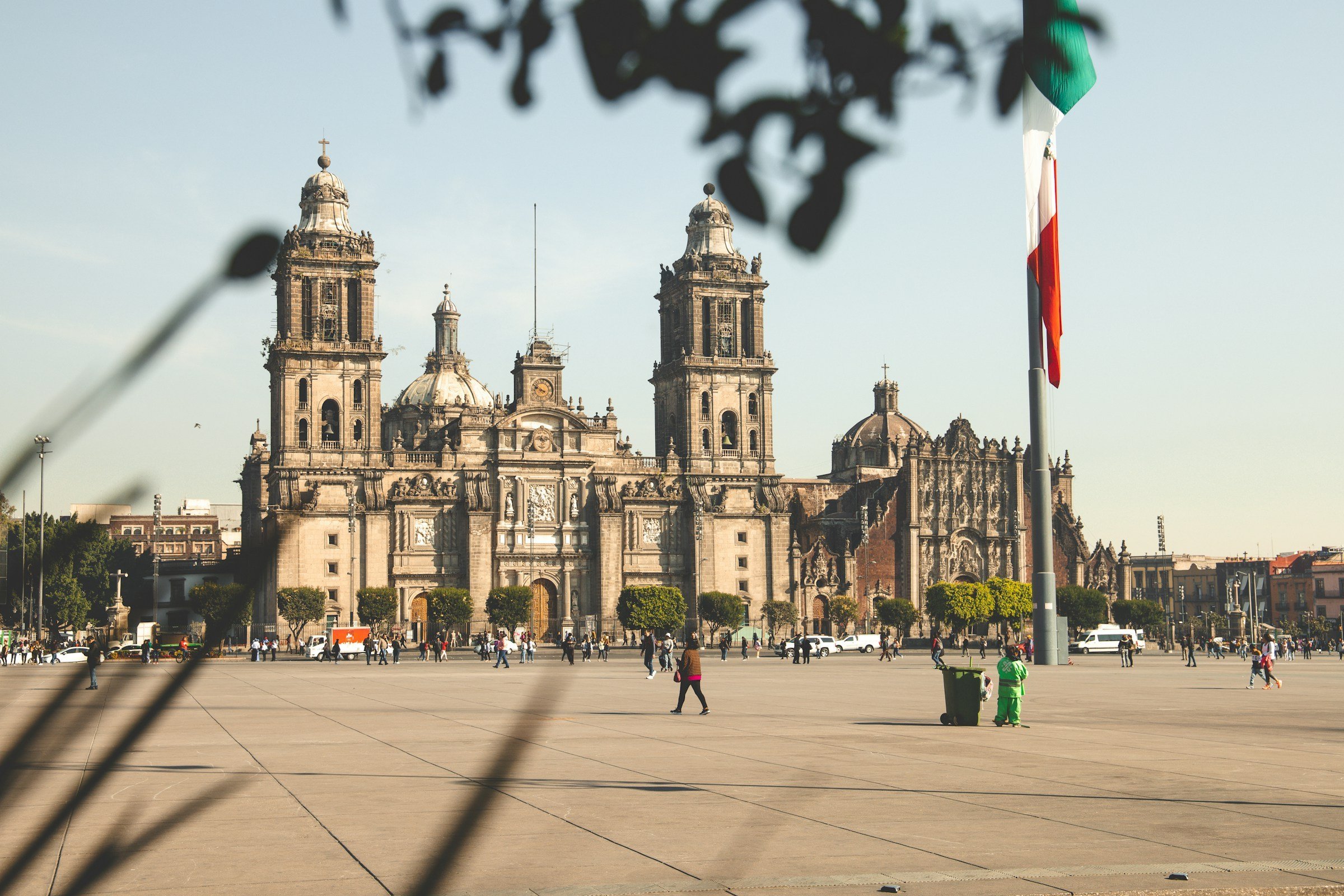
Where do I actually see the layers?
Stand in the Zócalo and look at the Metropolitan Cathedral. The stones in its base came from the Templo Mayor, the Aztec pyramid Cortés tore down. Walk east two blocks to the Templo Mayor museum and you can see the original temple foundations, the serpent heads and sacrificial stone, everything they excavated when a power company was digging in 1978. The cathedral sits on top of what used to be the sacred precinct. Same dirt, different gods.

The Museum of Mexico City, in a colonial mansion on Pino Suárez, has a glass floor section where you can see the Aztec walls underneath. The building’s owners found them during renovations. This happens constantly. The metro construction in the 1960s and 70s kept hitting pyramids. They built the Pino Suárez station around a small temple they found in the tunnels. You can see it on the platform between trains.
At Tlatelolco, the Plaza of Three Cultures, you get all three eras in one view. Aztec pyramid ruins on the left, Spanish church in the middle, 1960s apartment towers behind. The name is literal. Three civilizations stacked in one plaza. The church, Santiago Tlatelolco, used stones from the pyramid. The pattern repeats everywhere once you notice it.
What about the layers I can’t see?
Tenochtitlan sat on an island in Lake Texcoco. The Spanish drained the lake and built their city on the mud. The 1985 earthquake hit so hard partly because the ground is still lake bed, soft and unstable. Modern buildings sink. The Palace of Fine Arts has sunk more than three meters since 1934. You can see the original ground level marked on the exterior walls.
Avenida Reforma follows the old Tacuba causeway, one of three Aztec roads that connected the island to the mainland. When you walk Reforma from Chapultepec to the Zócalo, you are walking an Aztec route. The lake is gone but the path remains. The other causeway, now Calzada de Tlalpan, runs south. Same story.
The canals of Xochimilco in the south are what is left of the lake system. The chinampas, the floating gardens the Aztecs built, are still there. You can hire a trajinera (a flat-bottomed boat) and float through what used to be the farm network that fed a city of 200,000 people. It is touristy, yes, especially on weekends when the boats are loud and crowded, but it is also genuinely old infrastructure that never stopped being used.
How much Spanish colonial stuff is actually worth seeing?

Mexico City
More than I expected. The thing about colonial Mexico City is that it was the richest city in the Spanish empire. They had silver money from Zacatecas and Guanajuato, and they spent it on churches. The churches are excessive. Santo Domingo has a Baroque facade that looks like it is dripping gold. The interior is darker, quieter, lined with side altars where people still light candles and leave flowers.
The National Palace, on the east side of the Zócalo, is a Spanish colonial building full of Diego Rivera murals. Entry is free. You show ID and walk through metal detectors, then you are inside a building that was the seat of colonial power and is now the seat of federal power. Rivera painted the entire history of Mexico on the main staircase walls. It takes an hour to see properly.
Coyoacán, south of the center, kept more of its colonial layout. The neighborhood has narrow streets, low buildings, trees in the plazas. Frida Kahlo’s blue house is there, now a museum. Trotsky’s house, where he was killed with an ice axe in 1940, is also a museum, smaller and stranger. Both are worth the trip, but Coyoacán itself is the better reason to go. The market on weekends sells tlacoyos and quesadillas with huitlacoche (corn fungus), and the crowds are mostly local.
What is the deal with the more recent layers?
The 20th century added concrete, a lot of it. After the 1985 earthquake, building codes got stricter, so newer buildings are short and blocky. Colonia Condesa and Colonia Roma have Art Deco buildings from the 1920s and 30s mixed with modern apartments. The neighborhoods are flat, walkable, full of cafes and street dogs. Roma Norte in particular is where expats cluster, which means higher prices and English on menus, but also means good coffee and bookstores that stock things other than bestsellers.
Polanco, northwest of Chapultepec, is where money went vertical. High-rises, luxury shops, restaurants that cost $80 USD per person before drinks. The Soumaya Museum, shaped like a giant twisted prism and covered in aluminum hexagons, sits in Plaza Carso. The building looks like a spaceship. Inside is the private art collection of Carlos Slim, the telecom billionaire. Entry is free. The collection is uneven but includes a room of Rodin sculptures and a floor of colonial religious art.
Santa Fe, west of the city center, is newer still, built in the 1990s on an old landfill. It is all glass towers, shopping malls, and corporate offices. The streets were designed for cars. Nobody walks there. It feels like a different city, which is the point. People who work in Santa Fe often live in Condesa or Roma and sit in traffic for 90 minutes each way.
Can I see all the layers in one day or do I need a plan?
One day gets you the Zócalo, Templo Mayor, and the center. That is enough for the layering idea to click. The cathedral and the ruins are 100 meters apart. Two days lets you add Chapultepec Castle (built on an Aztec sacred hill, later the residence of Emperor Maximilian, now a history museum with views over the city) and either Coyoacán or Xochimilco.
Three or four days means you can add the outer neighborhoods and start noticing smaller things. The way Avenida Insurgentes, the longest avenue in the city, cuts through every era and every economic level. The 1968 Olympic sculptures rusting in median strips. The murals on university buildings. The street vendors selling tamales from the same corners their grandparents used.
The city does not hide its layers. It stacks them in plain sight and keeps building. That is the angle. You can walk from a pyramid to a colonial church to a Modernist tower in ten minutes, and all three will be in use.
If you liked this, you might like: Toronto, Washington DC, Chicago.
Planning the trip? Compare hotel deals before you book.