If You’ve Only Been to Capitals That Hide Their Rivers
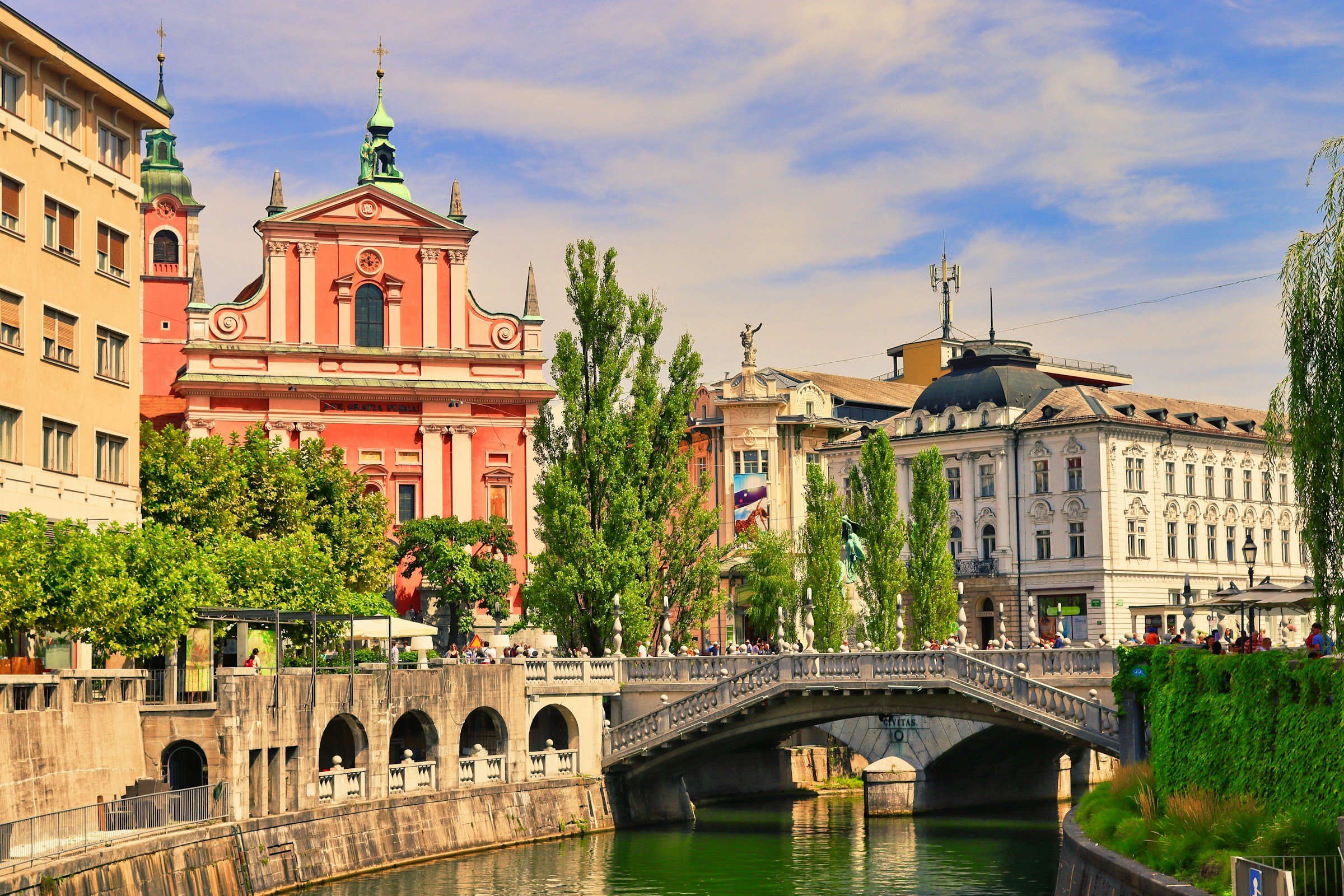
Most European capitals treat their waterways like infrastructure, something to build over or wall off with embankments too high to see from street level. Ljubljana keeps the Ljubljanica visible. You walk along Breg or Petkovškovo nabrežje and the river is right there, three meters below the cobblestones, moving fast enough that you can watch leaves spin in the current. Cafes face the water directly. People dangle their legs off the stone edges in summer. Kayakers pass under bridges where couples lean to watch the flow.

Ljubljana
The city built itself around the river instead of on top of it. Fifteen bridges cross in the old center, each short enough that you can see the next one upstream and the one downstream. Every span offers a different angle on Castle Hill rising behind the pastel buildings. You notice how visible water changes the rhythm of walking. Cross a bridge, follow the bank for two hundred meters, cross back. The loop never feels pointless because you’re watching something move.
If You Think Small Capitals Feel Sleepy
Ljubljana has 295,000 people. That sounds like a regional city, not a national capital. You arrive expecting quiet streets after 9pm and limited transit options. What you find is a pedestrian center packed until midnight on weeknights, students everywhere because the university dominates the economy, and enough bars per square kilometer that locals argue about which neighborhood has the best scene.
The car ban in the old center helps. Stari trg, Mestni trg, and Prešernov trg form a continuous walking zone where cyclists move faster than any vehicle. Trams run every six minutes on weekdays. Bus line 6 connects the train station to the castle funicular in eight minutes. The lack of traffic noise means you hear conversations from across the street and accordion players three blocks away. The density feels human-scale rather than compressed.
On summer Fridays, the Open Kitchen market fills Pogačarjev trg with food stalls until 9pm. You pay €4-6 per dish and eat standing or sitting on the fountain edge. Idrija žlikrofi, Istrian truffles, Korean fried chicken from a Slovenian chef who trained in Seoul. The variety is absurd for a city this size. By 7pm every stall has a line but nothing moves slowly because vendors prep in advance and people know what they want.
If You Expect Hills to Be Scenery, Not Infrastructure
Castle Hill and Rožnik Hill are not postcard backdrops. People use them. The path up Castle Hill from Reber starts steep but takes twelve minutes if you’re fit, eighteen if you stop to look back at the rooftops spreading below. Runners do interval training on the switchbacks. Dog walkers let their animals off-leash in the woods near the summit. The castle itself (entrance €10, or €13 with the funicular) is worth entering only for the tower view, but the hill trails are free and better than the castle.
Rožnik sits west of the center, covered in beech and oak forest. The main path loops three kilometers through trees high enough to block all city views until you reach clearings with benches facing the Julian Alps on clear days. Locals run it before work. When autumn leaf cover turns deep orange the trail becomes soft underfoot. No entrance fee, no opening hours, just forest inside city limits.
Tivoli Park connects the center to Rožnik’s base. It is not a formal garden but a massive green space with wide gravel paths, ponds where kids catch frogs, and enough overgrown sections that you can lose the sense of being in a capital. Jakopič Promenade runs dead straight through the middle, lined with chestnut trees and benches occupied by students reading and elderly couples feeding ducks. The park feels used, not maintained for tourists.
If You Assume Green Cities Are Just PR

Ljubljana
Ljubljana won European Green Capital in 2016 and the changes stuck. The center remains car-free. Free bike rental points (Bicikelj) sit every three blocks, €3 for weekly access and the first hour free per ride. Bike lanes run protected routes along Slovenska cesta and out toward Metelkova. The infrastructure works because the city is flat except for the hills everyone walks anyway.
Trash separation is strict. Five-bin systems at every apartment building: paper, glass, plastic, organic, residual. Fines for improper sorting are real (€40-200). Recycling bins on streets are clearly marked and emptied before they overflow. The streets around the central market stay clean even after the Saturday morning rush when vendors sell out by noon.
You see the green commitment in details nobody forces. Cafes use real cups, not disposables. The dragon fountain near Zmajski most runs on recirculated water. Rooftop gardens appear on new construction in Bežigrad. It is not a city pretending to care, it is a city where caring became standard practice.
If You Think Castle Views Cost €20 Minimum
The castle tower charges €10 for entry. Neboticnik, the 1930s skyscraper on Štefanova ulica, has a rooftop cafe where a coffee (€2.80) buys you the same view. Sit outside on the ninth floor and watch the castle, the Alps, and the entire old center spread below. The coffee is mediocre but nobody rushes you. Locals know this spot. Tourists climb the castle.
If you want higher, take bus 20 to the end and walk fifteen minutes up Šmarna Gora, a 669-meter peak north of the city. The trail is steep but paved part of the way. At the summit, two churches and a mountain hut serving beer (€3) and bean soup (€4.50). The view includes Ljubljana, the Sava River valley, and the Kamnik Alps stretching east. Round trip takes two hours. Cost: €1.30 for the bus.
If You Trust Guidebooks About Where Rivers Matter
The Ljubljanica does not just flow through the center. Follow it east past the market and it bends under Zmajski most, past the old slaughterhouse converted to galleries, out toward the wastewater plant. That stretch has no cafes, no bridges with views. But the cycling path stays close to the water and the riverbanks grow wild with reeds and blackberry bushes. Herons fish in the shallows. You pass under the rail bridge where freight trains rumble overhead.
The river becomes infrastructure again, not scenery, and that version matters too. Ljubljana does not hide the working parts of water flow. The lock system below the Triple Bridge still operates. Drainage channels feed into the main current. In heavy rain you see how fast the level rises and how close the river runs to the street level. The city trusts the river enough to build next to it without panic-level flood walls.
If you liked this, you might like: Belgrade, Bratislava, Zagreb.
Planning the trip? Compare hotel deals before you book.