1. The Sound Arrives Before the Water
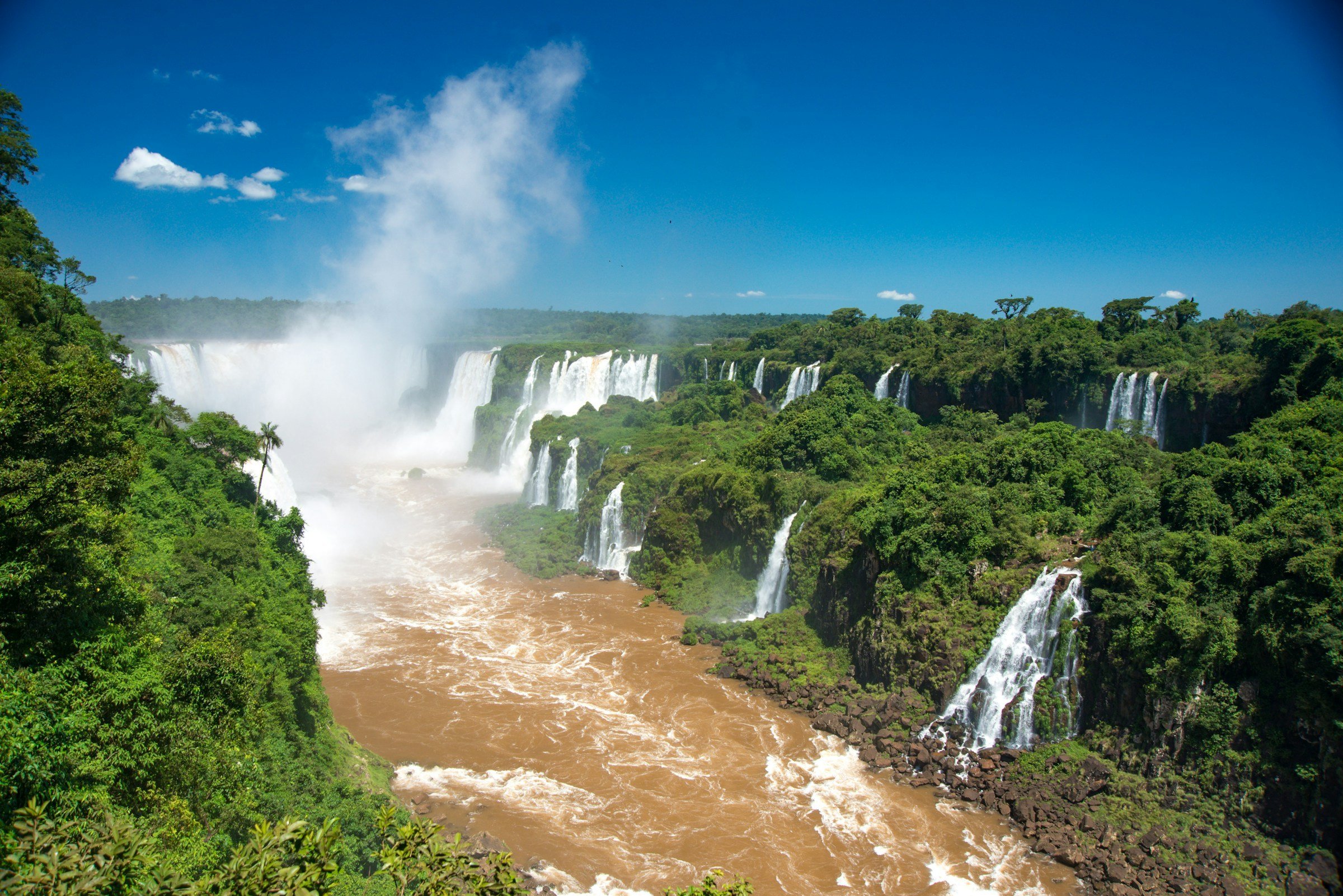
You hear Iguazu Falls from the parking lot, half a kilometer away. Not the distant hiss of white noise but a sustained roar that makes you lean toward whoever’s speaking and still miss half of what they say. By the time you reach the viewing platforms, the noise has become something you feel in your sternum. Tour groups give up on their guides’ explanations. Couples stop trying to narrate their videos. The falls are 275 separate cascades spread across nearly three kilometers, and the combined volume creates a sound that isn’t background anymore. It occupies the same space you do.
Foz do Iguacu
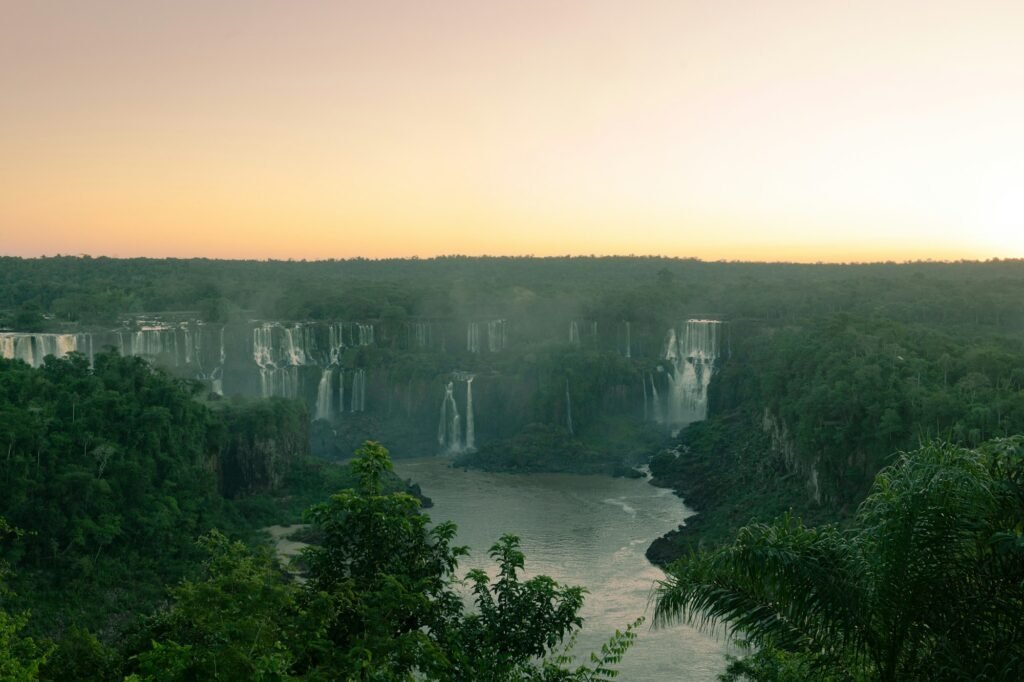
The Brazilian side offers the panorama everyone posts, a long metal walkway that juts into the canyon so you can face the Argentine side head-on. Garganta del Diablo, the Devil’s Throat, sits at the center, a U-shaped chasm where the Iguazu River drops 82 meters and disappears into mist. You cannot see the bottom. You cannot hear the person next to you ask if you got the shot. The spray soaks through rain jackets in under two minutes. Cameras fog. The walkway vibrates.
What nobody mentions is how the noise removes the need to perform. No one’s doing that hushed museum voice or trying to sound profound. You just stand there, wet, watching 1.7 million liters per second go over the edge, and the falls do all the work.
2. Three Countries, No Ceremony
The Triple Frontier is not a landmark so much as a confluence. You can stand at the Hito Tres Fronteras in downtown Foz and look across the Parana and Iguazu rivers to see Argentina to the left and Paraguay to the right. Each country has planted an obelisk painted in national colors. There are a few benches, a small artisan market that closes by six, and a view of two rivers that look like any rivers until you remember they define international borders.
The spot attracts retirees at sunset and families buying terere from the Paraguayan vendors who cross over daily. It does not attract crowds. No one lingers. The real Triple Frontier action happens at the Friendship Bridge, the 552-meter span connecting Brazil to Paraguay. On weekdays, the pedestrian lane clogs with people hauling electronics, textiles, and bulk goods back from Ciudad del Este, where import duties are low and enforcement is looser. The foot traffic moves in both directions, nobody checking passports, just a continuous flow of commerce that makes the border feel like a suggestion.
Across the river in Puerto Iguazu, Argentina, the border is more formal but equally casual. You show a passport, someone waves you through, and the whole crossing takes less time than finding parking. The three countries touch but they do not merge. You can buy Argentine choripan in Foz, drink Paraguayan terere in Puerto Iguazu, and pay in reais at establishments that accept pesos and guaranis with equal indifference.
3. The Argentine Side Works Differently
Foz do Iguacu
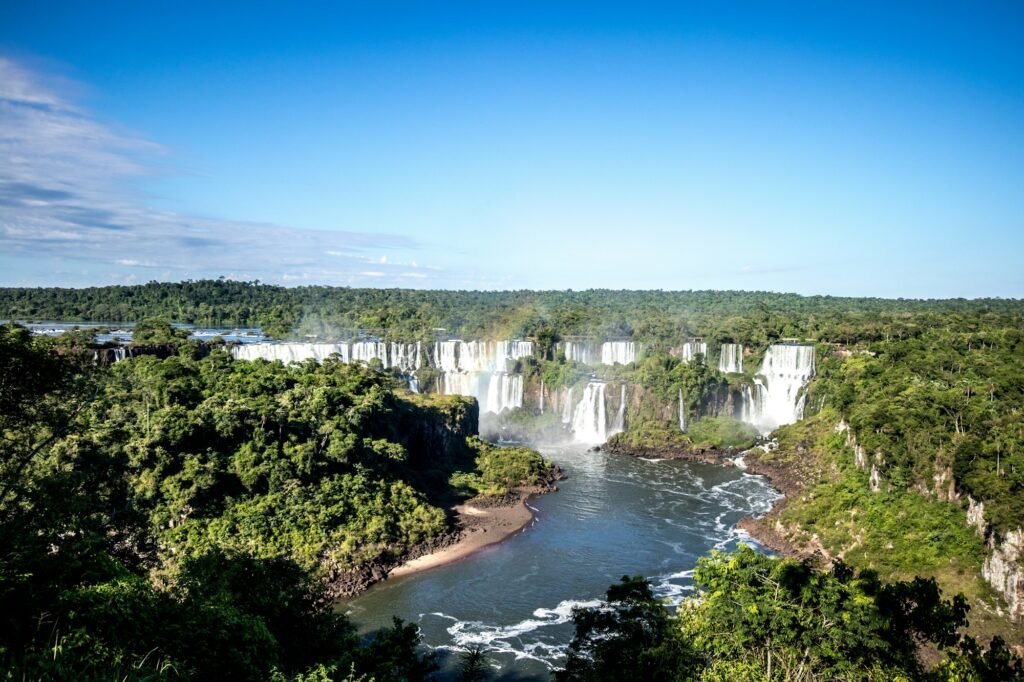
The Brazilian side gives you the view. The Argentine side gives you the water. You cross the Tancredo Neves Bridge into Puerto Iguazu, pay the park entry in pesos (around 18 USD for foreigners, double what locals pay), and board a narrow-gauge train that trundles through the forest to the start of the walking circuits. The train is painted green and moves slower than you walk, but the paths are long and the heat is aggressive, so you take it.
The upper circuit puts you level with the falls. You walk above the cascades on metal catwalks bolted into the cliff, close enough to see the river lose cohesion as it tips over the edge. The lower circuit takes you to the base, where the spray is thick enough to taste and rainbows form in repeating arcs whenever the sun breaks through. The water is brown from silt, not the crystalline blue of tourist brochures, and the volume is unrelenting.
At the end of the lower circuit, small boats run out to San Martin Island when the water level permits. The island offers no facilities, just trails and more catwalks, and fewer people because the boat only holds thirty and the river sometimes runs too high to cross. If the boat is running, take it. The isolation matters more than the views.
4. Garganta del Diablo Is Not Subtle
The train drops you at the trailhead for the Devil’s Throat, a 1.2-kilometer walkway built over the river itself. You are walking on the Iguazu River just before it ceases to be a river and becomes a cataract. The flow is visible beneath the grating. Fish hold position in the current. Caimans sun on the rocks near the bank.
The walkway ends at a wide platform suspended over the chasm. You are standing above the largest single drop in the park, a horseshoe of falling water that pulls fourteen separate currents into one roaring void. The noise is loudest here, not just because of the volume but because of the shape. The U-shaped canyon focuses the sound upward. People stop talking. A few try to yell into the void. The falls swallow the sound completely.
The mist rises in visible columns. Within thirty seconds, you are drenched. Visibility drops to a few meters. You stand at the railing and watch water disappear into water, and the scale becomes difficult to process. The park service installed a viewing platform on the Brazilian side that gives you the full panorama of the Devil’s Throat from across the canyon, but being across the canyon is a different experience. From the Argentine platform, you are inside the event. The difference is between witnessing and being involved.
5. The Town Is What Happens Between Falls
Foz do Iguacu is not charming. It is a border town of 260,000 people with wide streets built for cross-border traffic and a downtown that consists mostly of currency exchanges, electronics shops, and churrascarias. The main avenue, Avenida Brasil, runs for kilometers without much to recommend it beyond practicality. You eat at the restaurants near your hotel because they are near your hotel.
The exception is the Omar Khayyam, a Lebanese restaurant near the city center that has been open since the 1970s and serves lamb kibbeh and fattoush that taste like someone’s grandmother is still running the kitchen. A meal costs around 45 reais (9 USD) and includes more pita than you can finish. The municipal market, Mercado Municipal, opens early and closes by two, selling produce, dried mate, and fresh fish from the Parana. The fish is cheap and good. The market is not picturesque.
The town exists because of the falls and the Itaipu Dam, the hydroelectric plant upstream that produces 90% of Paraguay’s electricity and 20% of Brazil’s. You can tour the dam, but it is a tour of a concrete infrastructure project, not a tourist experience. You see turbines and spillways and learn about megawatts. People go because they run out of other things to do, and the tour is fine, but the falls remain the point. Everything else in Foz is logistics. Where you sleep between visits to the roar.
If you liked this, you might like: Asuncion, Santiago, Salvador.
Planning the trip? Compare hotel deals before you book.