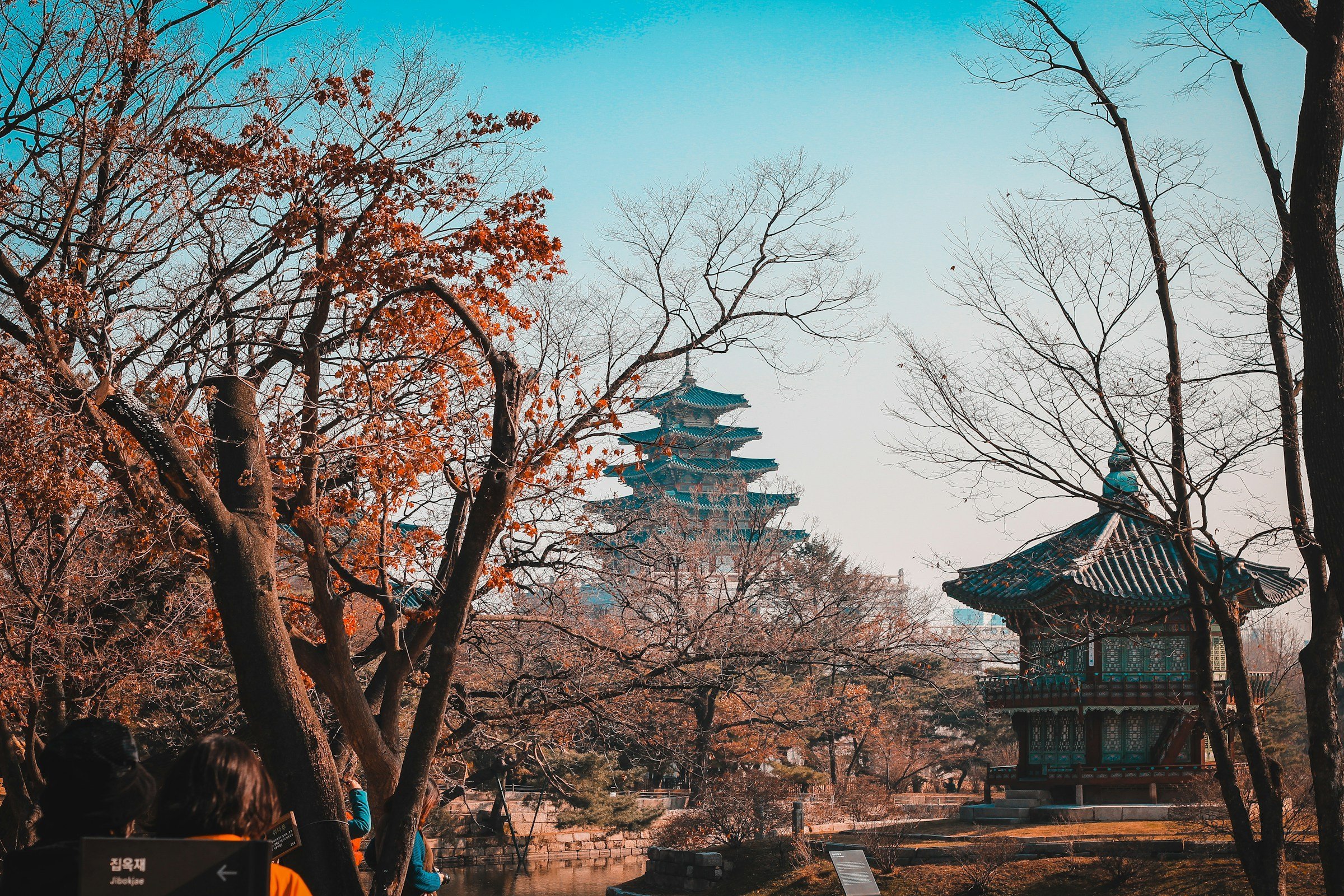
If you think the Han River is just scenery, wait until you see commuters praying at dawn
The pedestrian bridge at Banpo deposits you on an island before sunrise. Office workers in pressed shirts bow at a Buddhist shrine the size of a phone booth, slip folded bills into the offering box, then rejoin the crowd streaming toward Gangnam. No one speaks. The neon Samsung logo reflects off the water behind them. You thought Seoul would pick one identity, ancient or digital. It refuses.

Seoul
The Han cuts the city into two temperaments. North side holds the palaces, the hanok villages where tour groups shuffle through restored courtyards. South side built itself in thirty years, glass and concrete climbing until the skyline looks like a server farm. But the division is cleaner on maps than on foot. A hiking trail to Namsan ends at a cell tower. A subway exit at Gangnam Station opens into a basement lined with fortune tellers. The city layers fast and slow until you stop trying to separate them.
If you expect monks to retreat from noise, you’ll miss the 4am chants above Itaewon
Jogyesa Temple sits one block from a six-lane road where delivery scooters run red lights at 11pm. The courtyard smells like incense and car exhaust. Monks start morning prayers at 4am, percussion and chanting audible from the street. By 5am, elderly women in hiking gear are circling the complex, touching prayer beads, then heading uphill to Inwangsan before the subway fills.
Nobody pretends the spiritual life exists in isolation here. Bongeunsa Temple shares a neighborhood with the COEX Mall, which holds an aquarium, a casino, and a bookstore the size of an airplane hangar. You can attend a temple stay program on Saturday, sleep on a wooden floor, eat rice porridge in silence. Sunday morning you’re back on Line 2 where high school students review calculus flashcards and office workers sleep against the glass. The whiplash is the point. Seoul doesn’t zone its contradictions into separate districts.
Bukhansan proves ambition climbs too
The national park begins at the subway. Exit Gupabal Station and follow retirees wearing sponsored hiking jackets (Samsung, Hyundai, LG) up granite trails. They pass you. You thought you were in reasonable shape. These grandmothers are moving at four kilometers per hour on a forty-degree incline, stopping only to drink barley tea from thermoses covered in stickers.
The summit at Baegundae takes two hours if you don’t pause. Most people pause. Not to rest but to check whether the trail qualifies as cardio on their fitness apps. A monk in grey robes sits near the peak selling bottled water (₩2,000, about $1.50 USD). Someone’s Bluetooth speaker plays K-pop until a hiker in her sixties shouts him down in Korean. Silence lasts five minutes. Then the next group summits.
If you assume palaces are peaceful, Gyeongbokgung will correct you by 10am

Seoul
The guidebooks call it the most important palace of the Joseon Dynasty. They don’t mention it sits beside a six-lane intersection or that the ticket booth runs credit cards. You enter through Gwanghwamun Gate at 9am hoping to walk empty courtyards. By 9:30, Chinese tour groups in matching hats flood the throne hall. A teenager in rented hanbok poses for a friend’s phone camera. Seventy-three takes. You count.
The National Folk Museum occupies the eastern side. Inside, dioramas show agrarian life, pottery kilns, kimchi preparation. Outside the windows, you see Jongno Tower, a glass high-rise where Samsung leases twelve floors. The juxtaposition isn’t subtle. It’s not trying to be. Seoul presents its history as one option among several current realities.
Insadong sells you both
The neighborhood markets itself as traditional. Tea shops, calligraphy supplies, pottery studios. Also: a Starbucks designed to look like a hanok, street vendors selling phone cases shaped like cartoon dumplings, a store that only stocks socks with corporate mascots. On Sundays the main road closes to cars. You’ll see a man painting landscapes with a brush the size of a mop. Ten meters away, a stall sells skincare endorsed by K-pop stars whose faces cover buses across the river.
Nobody here thinks the contrast is ironic. A grandmother buying rice cakes stops to photograph a mural. A teenager in a school uniform buys incense, then vapes on the corner. You wanted authenticity. Seoul offers coexistence instead.
If you think subway riders disconnect, Line 2 will show you ambition never stops
The green line circles the city. Board at Hongik University and you’ll share space with art students holding portfolio cases, office workers reviewing presentation decks, kids in school uniforms studying English vocabulary. At 7am the cars are silent except for keyboard taps on phones. Everyone is working or preparing to work.
Exit at Gangnam Station and the underground mall runs for half a kilometer. Cosmetic surgery clinics advertise in elevator tunnels. Tutoring academies promise Ivy League placement rates. A poster for a meditation app hangs beside an ad for resume consultation (₩150,000, about $115 USD). The tension is not east versus west. It’s striving versus the exhaustion of striving, and both happen in the same hour.
Noryangjin Fish Market doesn’t sleep
The auction starts at 1am. Vendors hose down concrete. Tanks bubble. By 3am, restaurateurs are bidding on flatfish the size of cutting boards. You can buy anything live here, pick a table upstairs, and someone will prepare it while you wait. Sashimi, grilled mackerel, spicy seafood stew. It costs less than dinner in Itaewon (₩40,000 for two people, about $30 USD) and tastes better.
At 6am the market is still running. Workers eat rice and soup at plastic tables. A temple bell rings from somewhere south of the river. The fish vendors don’t look up. Ambition here doesn’t pause for spiritual reflection. It just continues, practical and relentless, in a city that never agreed to choose one version of itself.
If you liked this, you might like: Hong Kong, Singapore, Taipei.
Planning the trip? Compare hotel deals before you book.