The Horn is Not Honking at You
You will think every motorbike in Hanoi is honking at you specifically. They are not. The horn here works like echolocation. A rider taps it to announce presence, not anger. Two quick beeps before an intersection. A longer note when passing on the right. A short chirp when squeezing between a parked truck and a fruit vendor’s cart. The sound operates below conscious thought for the people who live here. For you, standing on Hang Bong Street trying to cross, it sounds like thirty drivers screaming. After three days your brain stops translating it as aggression. After a week you start to hear the grammar in it.

Hanoi
Stand at the corner of Tran Nhan Tong and Hai Ba Trung around the time offices let out. The noise builds in layers. The whine of 125cc engines forms the bass line. Over that, the staccato of horns in three pitches, high for scooters, lower for the bigger bikes. Then human voices, a woman shouting into her phone while steering with one hand, a man singing along to something in his earbuds. Plastic bags snap in the wind. A rolled-up rug strapped to a rear rack whistles. The city hums at a frequency you feel in your ribcage before you hear it.
Crossing the Street Becomes Liturgy
There are no gaps in the traffic to wait for. If you wait for a gap you will stand on the curb until your visa expires. The technique is to step off the curb and walk at a steady pace while the motorbikes flow around you. Do not stop. Do not speed up. Do not make eye contact and then freeze. The riders calculate your trajectory and adjust. The system depends on you being predictable. Hesitation breaks it.
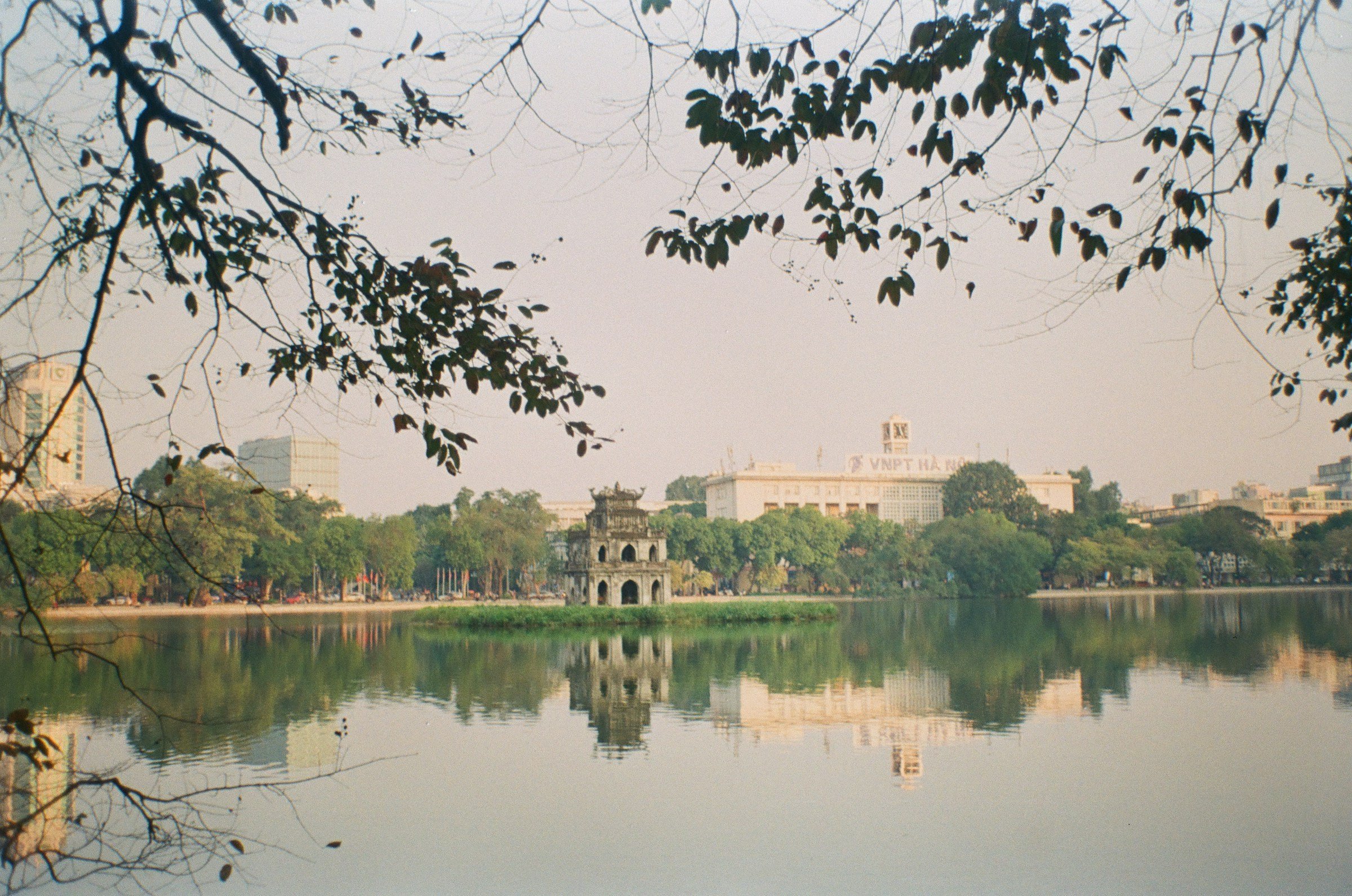
I watched a German couple stand at the edge of Hoan Kiem Lake for eleven minutes before a local woman in her sixties took the man’s hand and walked him across like a child. He was sweating. The motorbikes missed him by inches because he finally moved at a consistent speed instead of lunging forward and jerking back. You cannot think your way through a Hanoi intersection. You walk and trust the physics of it.
After midnight the motorbike volume drops but never stops. Delivery riders carry towers of plastic stools. A man hauls a refrigerator strapped upright behind him. Someone has a live pig in a wire cage bungee-corded to the seat. The 3am streets belong to cargo, not commuters, and the engine notes change. Deeper, slower, the groan of bikes loaded past their design weight.
You Hear Neighborhoods Before You See Them
The Old Quarter sounds different from Tay Ho. In the narrow streets around Hang Ma, sound traps between buildings and multiplies. The motorbikes slow to walking speed and the noise compresses into something solid. You smell exhaust and hear the pop of two-stroke engines that should have been retired a decade ago. Vendors push carts into the street and the bikes swerve without braking. Bells ring. A man selling balut from a shoulder pole calls out in a rhythm that syncs with the horn taps. The acoustic texture is grainy, layered, thick enough to choke on.
West Lake spreads the sound out. Wider streets. Trees absorb some of the higher frequencies. The motorbikes accelerate and the engine notes smooth into a collective drone, still loud but less jagged. You can hear individual conversations at the outdoor cafes. A woman laughs. A glass clinks. Then a cluster of bikes passes and the soundscape surges and swallows everything again.
If you want quiet, there is none. Not in Hanoi proper. You can go inside the Temple of Literature and the stone walls cut the noise by half, but you still hear it. The city leaks in. I met an American architect who wore earplugs for the first two weeks before he realized he was missing the point. The noise is the city. Trying to block it out is like moving to the ocean and complaining about waves.
Families Operate as Single Vehicles

Hanoi
A man drives. His wife sits sidesaddle behind him, holding a toddler. An older child stands on the floorboard in front, gripping the handlebars. Sometimes a baby sleeps in a sling against the mother’s chest. The bike lists slightly left from the weight but the rider compensates without thinking. This is not recklessness. This is logistics. Four people, one engine, no alternative. I have seen a family of five on a single Honda Wave. The smallest child sat on the gas tank facing backward, watching traffic recede.
The bikes themselves produce different sounds depending on load and age. A new Yamaha Exciter carrying one person has a clean mechanical whine. A fifteen-year-old Honda Dream loaded with two adults and thirty kilograms of rice in burlap sacks sounds like it is coughing. The exhaust rattles. The engine misfires on hills. But it keeps going because it has to. Most bikes in Hanoi do not get repaired until they stop running. Maintenance is patch and pray. The noise reflects that. You hear duct tape and wire and hope.
Rain Changes the Pitch
When it rains, ponchos come out. Thin plastic raincoats in yellow, blue, pink. They snap and flutter at speed and add a new layer to the soundscape. The hiss of tires on wet pavement. The slap of water thrown up by wheels. Engines sound wetter, softer. The horns still beep but the noise does not travel as far. Rain absorbs it.
After a heavy rain the streets flood in the lowest parts of the Old Quarter. Motorbikes push through water up to their exhaust pipes, moving slowly, engines sputtering. Some stall. Riders get off and push them to higher ground while water fills their shoes. The sound during a flood is different, submerged, muffled. The city gargles.
You Stop Noticing It and Then You Miss It
I left Hanoi for Sapa. The mountains were silent except for wind and chickens and the voices of children walking to school. I slept nine hours the first night. By the third night I could not sleep at all. The silence felt wrong. Too empty. I missed the noise I had spent two weeks complaining about.
When I came back to Hanoi and stepped out of the train station, the wall of sound hit me and I smiled. The city was still there. Still moving. Still honking its way through the afternoon. A woman on a scooter cut in front of me carrying a stack of egg cartons four feet high. A man balanced a ladder horizontally across his handlebars. Someone’s horn played a tune I almost recognized. I walked into traffic without hesitating and the motorbikes parted around me like water, exactly as they should.
If you liked this, you might like: Singapore, Bangkok, Kuala Lumpur.
Planning the trip? Compare hotel deals before you book.