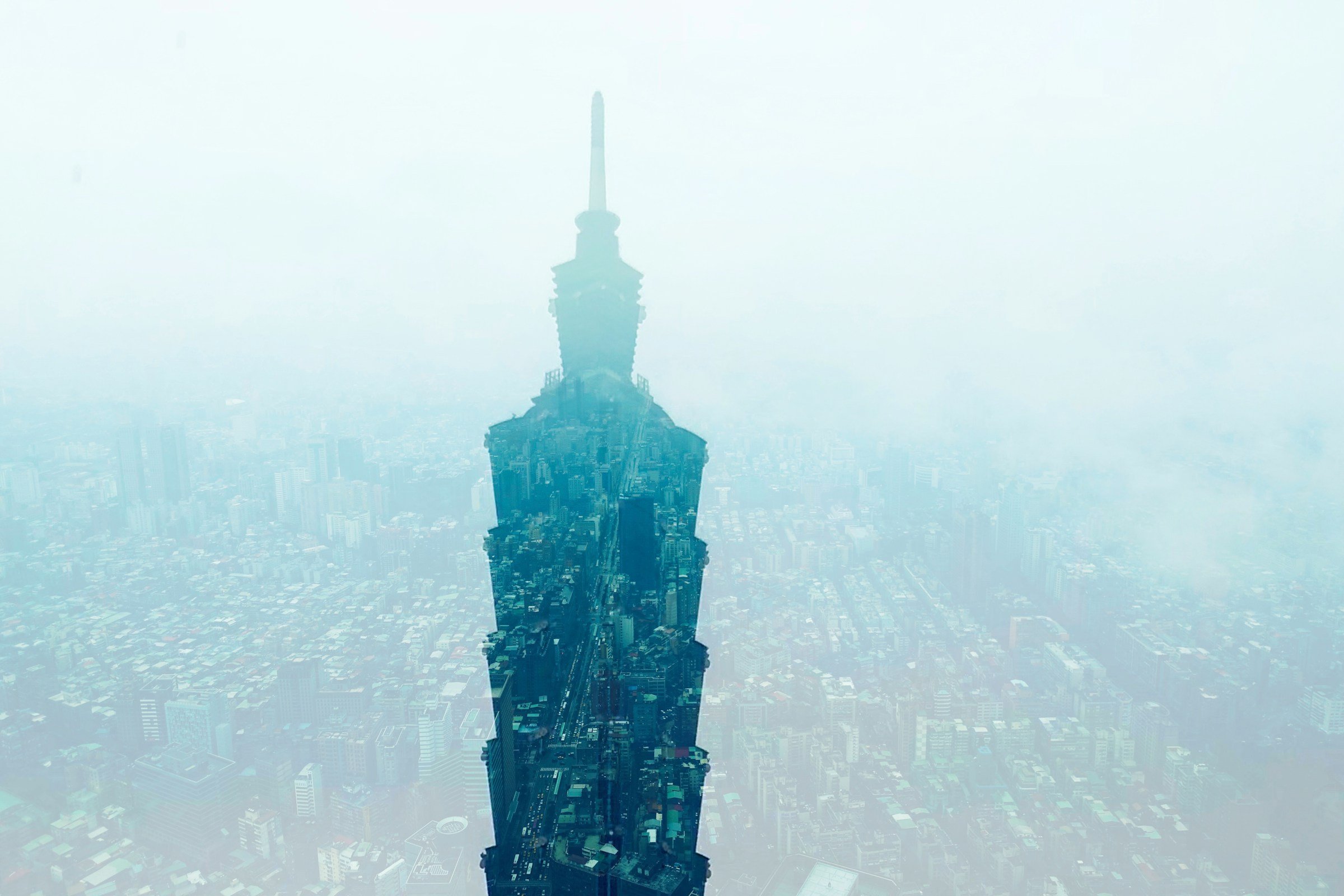
You step out of the MRT at Taipei 101 and the tower fills your vision like a vertical city. Eighty-nine floors of glass and steel anchored by wind dampers the size of small apartments. Two blocks away, past the food court and the luxury mall entrance, a woman burns incense at a street-corner shrine built into the ground floor of a parking garage. The joss paper curls into ash while teenagers in line at the boba shop check their phones. Nobody finds this strange. The city runs on both frequencies at once.

Taipei
Taipei stacks eras without cushioning the collision. A morning in Xinyi District means breakfast at a hole-in-wall serving soy milk and youtiao, the kind of place with metal stools and fluorescent lights that have been flickering since 1987. You finish and walk fifty meters to a concept store selling Japanese ceramics in a minimalist space where each teacup costs NT$3,800 (USD $120). The neighborhood contains both, and the transition is immediate. You cross the street and the century changes.
The thing nobody tells you is how vertical the layering gets. Everywhere else, old quarters huddle in one part of town and skyscrapers claim another. Here they share the same intersection. Longshan Temple sits surrounded by mid-rises and LED billboards. The temple itself dates to 1738, rebuilt after earthquakes and bombs, its roof dense with dragons and phoenixes in glazed ceramic. You walk through clouds of incense thick enough to sting your eyes, past altars dedicated to Guanyin and Mazu and deities whose names you don’t recognize. Exit the main hall and you’re facing a 7-Eleven and a tower with mirrored windows reflecting the temple back at itself.
Streets That Refuse to Choose
Dihua Street keeps its Japanese-era shophouses intact. Two stories, narrow facades, the kind of architecture that belongs to 1920s merchant families selling tea and dried goods. Some have been renovated into cafes where a flat white costs NT$150 (USD $5) and the ceiling beams are original cypress. Others still function as wholesale fabric stores, the same families running them for three generations, bolts of cloth stacked to the ceiling and prices negotiated in Taiwanese Hokkien.
Walk the whole street and you get both versions in alternating rhythm. A shop selling traditional medicine, the walls lined with wooden drawers labeled in characters for herbs you can’t identify. Next door, a gallery space with white walls and track lighting, showing ceramics that cost more than your flight here. The block doesn’t resolve the tension. It just presents both and expects you to navigate the gap.
The same pattern repeats in Zhongshan. You eat beef noodle soup at a place with peeling paint and a line out the door, NT$180 (USD $6) for a bowl that takes forty minutes of simmering to produce that specific depth. The broth is dark and the tendon melts. Finish and walk two blocks to a cocktail bar in a renovated machinery warehouse where drinks start at NT$450 (USD $14) and the bartender uses liquid nitrogen. Both are crowded. Both represent actual contemporary life here, not theme-park versions of old or new.
Altitude as Time Machine

Taipei
The mountains around Taipei are full of temples, and reaching them means riding roads that switch back through humid air and fruit trees. Zhinan Temple sits high enough that the city spreads below in a haze of gray and green. The temple itself, built in 1882, clings to the slope in layers. You climb stairs between halls dedicated to different deities, the architecture following the mountain’s angle rather than fighting it.
What makes it strange is how fast you get there. The Maokong Gondola takes thirty minutes from the city center. You ride in a glass cabin over tea plantations and then you’re at altitude, looking down at the same towers you walked past an hour ago. The elevation creates distance but not separation. You can see both worlds at once. Office buildings catch the afternoon light while incense smoke rises from the temple courtyard.
Elephant Mountain offers the opposite view. The trail is steep, more stairs than path, and it takes forty minutes to reach the outlook where everyone goes for photos. From there, Taipei 101 dominates the skyline but the rest of the city fills in around it. Low buildings, old neighborhoods, the tangle of streets that predate any grid. The tower becomes context rather than exception. It’s tall because everything around it isn’t, and the mix is what defines the sight line.
Night Markets and Glass Facades After Dark
Raohe Night Market runs along a single street, packed tight with stalls selling pepper buns and oyster omelets and stinky tofu that smells exactly like its name. The crowd moves slowly, stopping to eat and then shuffling forward. Grease and steam and the specific humidity that comes from that many bodies cooking and eating in close proximity. You finish a skewer of grilled squid and the vendor hands you a plastic bag for the stick.
Exit at the far end and you’re facing new apartment towers, thirty floors of lit windows and balconies where laundry hangs. The market doesn’t fade gradually into residential quiet. It just stops. One side of the street is night market chaos and the other side is apartment lobbies with security guards and potted plants. People live in those towers and eat at the market, but the border between them is absolute.
Ximending does something similar with youth culture and old infrastructure. The neighborhood is Tokyo’s Shibuya translated into Taiwanese context: pedestrian streets, clothing stores, buskers, kids in streetwear taking photos for Instagram. The buildings themselves are older, some dating to the Japanese occupation, but the ground floors have been gutted and refilled with bubble tea shops and sneaker stores. You can see the original architecture if you look up past the neon signs. The bones are still there. The skin changes every five years.
After three visits I started to see the layering as the point rather than a contrast someone failed to smooth out. Other cities separate their eras into districts you visit sequentially. Taipei puts them in the same frame and expects you to hold both in your head simultaneously. A morning might include a temple built during the Qing Dynasty, breakfast at a dumpling shop from the 1970s, and coffee in a space designed last year with poured concrete and Edison bulbs. The day doesn’t progress through history. It crosses it laterally, back and forth, until the chronology stops meaning much.
If you liked this, you might like: Hong Kong, Tokyo.
Planning the trip? Compare hotel deals before you book.