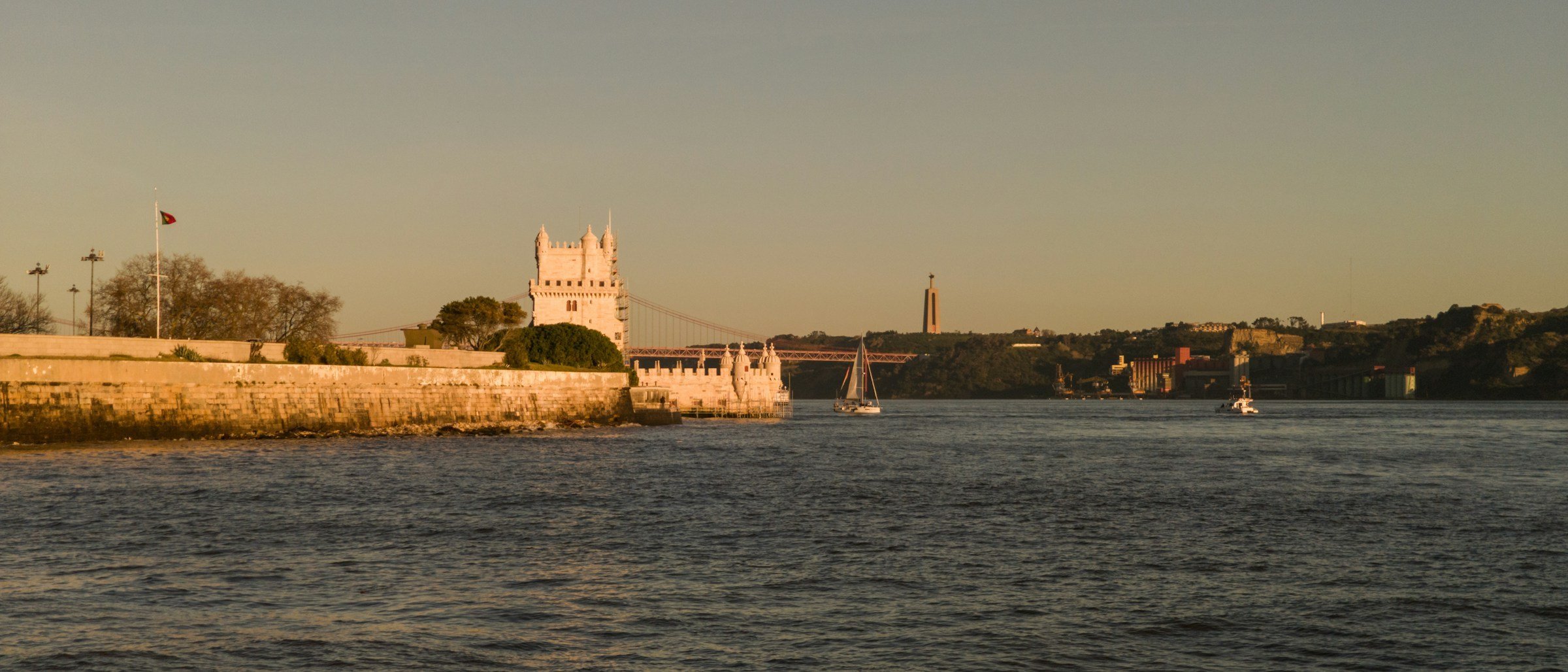
The City Built on Legs
You arrive in Lisbon thinking you know what hills mean. Then you spend three hours trying to walk from Baixa to Alfama and realize the city has been designed by someone who hated flat surfaces. The map on your phone shows a fifteen-minute route. Your calves suggest otherwise. Every street that looks level from the bottom turns into a near-vertical scramble halfway up, and the medieval alleyways twist back on themselves in ways that make GPS give up entirely.

Lisbon
The hills aren’t picturesque backdrop. They are the city’s organizing principle. Neighborhoods stack on top of each other at angles that feel impossible. From Miradouro de Santa Luzia you can see terracotta roofs cascading down toward the Tagus, but getting from that viewpoint to the restaurant you spotted two streets below means descending eighty stone steps, walking three blocks sideways, and climbing back up forty steps on the other side. By day three you start planning routes based on which direction is downhill after lunch.
The trams make sense now. Tram 28 isn’t a tourist attraction pretending to be transport. It’s the only reasonable way to move through Graça and Estrela without destroying your knees. Locals pack into it during morning commute because walking these grades twice a day, five days a week, would be a part-time job on its own. When the tram lurches around a corner on Rua da Conceição and you can see straight down into someone’s third-floor kitchen window, you understand why Lisbon’s public staircases have rest platforms every twenty steps.
Azulejos as Landmark and Apology
The tile work starts as decoration and becomes navigation. You remember a corner by the blue hunting scene wrapping around the pharmacy, or the yellow geometric panel that marks the turn before your hotel. After a week you stop photographing individual azulejos because they’re everywhere. Entire building facades in Campo de Ourique are tiled floor to roofline. Metro stations look like museums. The walls inside São Bento station tell the history of Portuguese transport in twenty thousand hand-painted tiles, and people barely glance at them while buying tickets.
Some panels date back to the 1700s. Others are contemporary reproductions after the 1755 earthquake destroyed half the city. The older ones show saints and naval battles. The newer ones advertise soap brands from 1920 in lettering that was already nostalgic when it was installed. In Alfama you’ll find tiles on buildings so crooked they look like they’re held up by habit and paint. The facade leans ten degrees but the azulejos stay perfect, which says something about priorities.
The tiles aren’t weathering gracefully. Some panels have gaps where pieces have fallen off. Others are tagged over with graffiti in alleys that tourists don’t walk through. The city replaces them slower than they crack, and there are buildings in Mouraria where you can see four different tile styles patching the same wall. But the overall effect still works. Walk down Rua do Século at dusk and the blue and white tiles catch the streetlights in a way that makes the whole block glow.
The Intimacy Problem

Lisbon
Lisbon feels small when you look at a map. Seven parishes in the historic center, all walkable in theory. Then you’re standing at the bottom of Calçada do Lavra with your destination three hundred meters away and a fifty-meter altitude gain in between, and the city expands into something much larger. The neighborhoods don’t connect the way you expect. Bairro Alto at night is packed shoulder to shoulder with people drinking Imperial beers on the street. Walk ten minutes downhill to Cais do Sodré and it’s just dock workers and early-morning fish vendors.
The alleyways in Mouraria are two meters wide. You can touch both walls without stretching. Laundry hangs overhead on lines that cross from building to building, and the woman on the third floor can hand her neighbor a coffee cup without leaving her window. This kind of density should feel claustrophobic but it doesn’t, maybe because you turn a corner and suddenly you’re at a miradouro looking out over the entire river. The city keeps offering you escape routes vertically even when the streets feel like tunnels.
The intimacy means you overhear things. Couples arguing in Portuguese at outdoor tables. Kids playing football in Largo do Carmo using a traffic cone as one goalpost. Someone’s grandmother yelling at a delivery driver who parked in front of her doorway. You’re not eavesdropping, there’s just no acoustic privacy when buildings are this close and windows stay open because nobody has air conditioning. By the end of your trip you recognize the regular crowd at the coffee counter in your local pastelaria even though you’ve never said a word to them.
What the Exhaustion Costs
Around day five your right knee starts making opinions known. The hills aren’t getting easier, you’re just getting slower. You start taking the elevador in places you would have climbed the week before. Elevador da Glória costs €3.80 in a rechargeable Viva Viagem card, and it’s worth every cent when the alternative is the incline up to Bairro Alto after you’ve already walked from Belém.
The fatigue changes what you see. You stop rushing to fit in every miradouro and cathedral. You sit longer at cafes. You notice details like the brass door handles polished smooth by a century of hands, or the way the calçada portuguesa sidewalks have a different pattern in every neighborhood. The exhaustion makes the city slower, which might be the correct speed for Lisbon anyway.
There are easier cities to visit. Ones with flat centers and wide boulevards. Ones where you can see six major sites before lunch without your legs staging a revolt. Lisbon isn’t that. It asks you to earn its views by climbing to them. It hides its best tile work on side streets you’ll only find by getting lost. The medieval layout hasn’t been rationalized into a grid because the hills make grids impossible. You get a city that sprawls across seven hills and still feels like a collection of villages that happen to share a tram system. Whether that’s worth the climb depends on how much you like your knees.
If you liked this, you might like: Oslo, Sofia, Moscow.
Planning the trip? compare hotel deals from Stavanger, Oslo, Bergen, and Trondheim.