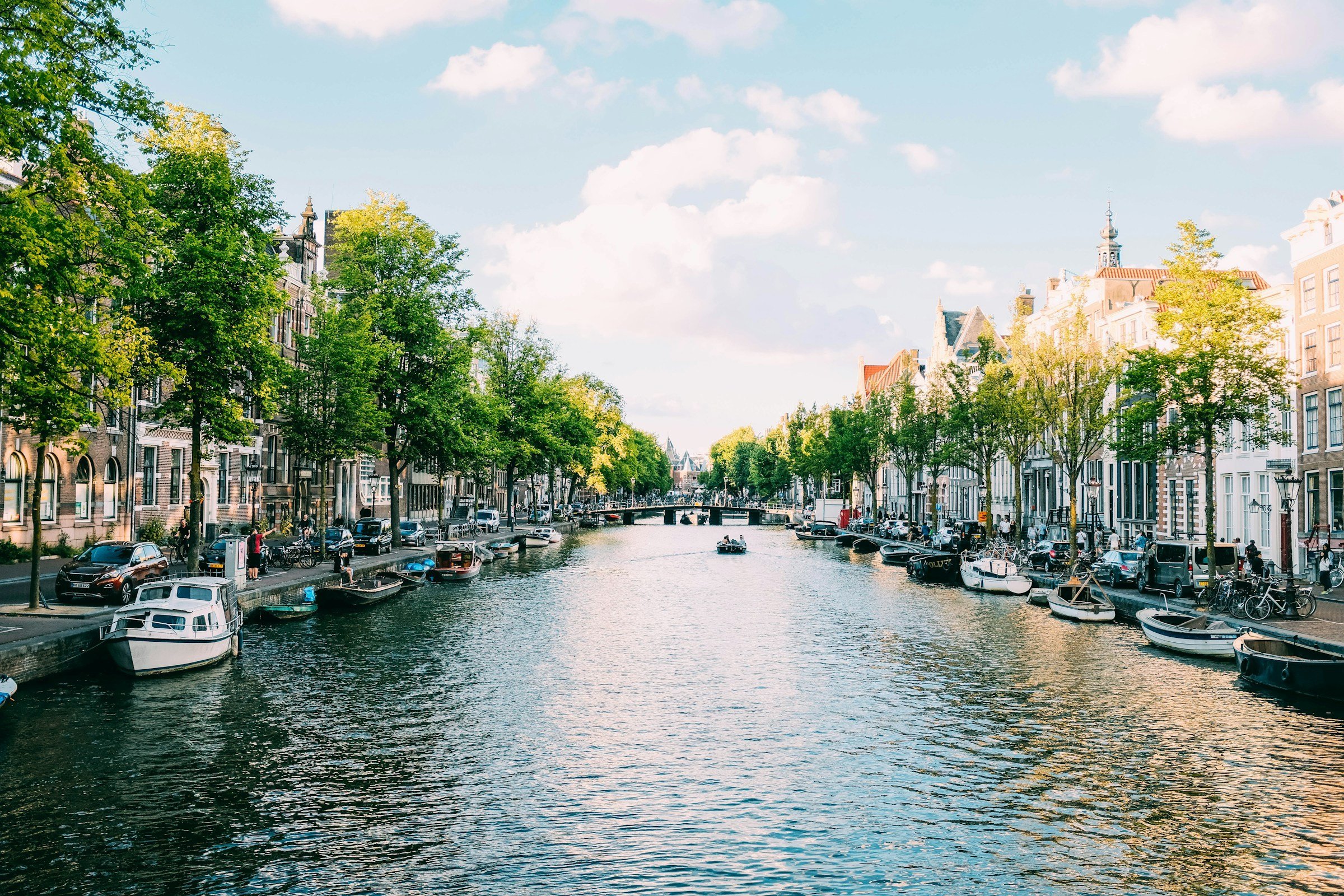
If you think Amsterdam is a museum city, the canal houses will argue back
You arrive expecting preserved architecture under glass. What you get: buildings leaning three degrees off plumb because peat soil compresses unevenly under oak pilings driven twelve meters down. The city sits on what was swamp. Every structure is a negotiation with subsidence. The famous neck gables at the top of canal houses weren't decorative flourishes. They're pulleys. Furniture goes up the outside because staircases inside are too narrow and steep for a couch. When you see a piano being hoisted to a third-floor window on Prinsengracht, that's not a show for tourists. That's how it works.

The houses tilt forward by design. It keeps rain off the facades and hoisted cargo clears the windows below. Walk along Herengracht and you'll see entire rows leaning in different directions, none of them plumb, all of them standing. For three centuries. Pragmatism encoded in brick.
If you think bikes are a progressive choice, wait until you need to cross a street
There are 880,000 people in Amsterdam and over a million bikes. They are not a lifestyle statement. They are infrastructure. The bike lanes are red asphalt, not paint. They have their own traffic lights. They have priority over cars at most intersections and equal standing with trams at others. If you step into a bike lane while looking at your phone, you will be hit. Not maybe. You will be hit, and the cyclist will be annoyed at you for the delay.
Tourists rent bikes and last about forty minutes before realizing this is not a leisure activity. Cargo bikes the size of sofas move furniture, groceries, children, and lumber. Commuters in suits and rain gear do thirty kilometers per hour in morning traffic. There are no helmets. There is no lycra. It rains 145 days a year and people bike through all of it. The rental shops near Centraal Station will tell you about bike etiquette. Listen to them. Or don't, and learn why Dutch directness exists.
Bike theft is its own economy. If your rental bike costs more than €80, it will be stolen. The city fishes 15,000 bikes per year out of the canals. Some of them were thrown in by owners trying to prevent theft. Some of them were dumped by thieves who realized the lock was better than expected. At Waterlooplein market, you can buy your stolen bike back for €25. No one pretends otherwise.
If you think tolerance is ideological, it's actually older than that

Amsterdam has been a port city for 700 years. Ports don't survive by asking where the cargo came from or what the sailors believe. The Iberian Jews who fled the Inquisition in the 1590s brought diamond-cutting skills and trade connections. The Huguenots fleeing France brought textile expertise. The pragmatic calculation was simple: these people will make money for the city, and money matters more than forcing everyone into the same church. Tolerance was an economic strategy before it was a moral one.
The result is a city that built infrastructure for difference. The Portuguese Synagogue from 1675 still holds services. There are mosques in former warehouses. The Cannabis College on Oudezijds Achterburgwal offers free information about a plant that's illegal to grow commercially but sold in 166 licensed coffeeshops. It's not coherent. It's not supposed to be. The point is that the system bends instead of breaking.
This gets mistaken for permissiveness. It's not. There are rules. Strict ones. You can buy space cake at a coffeeshop but you can't smoke tobacco inside. You can visit the windows in De Wallen but photography of the workers will get your phone thrown into the canal, possibly with you attached. The social contract is: we will let you do things other cities won't, and in exchange you follow the specific boundaries we set. Break them and the politeness evaporates fast.
If you think canals are for gondolas, try living next to one when it's cold
The canals are not decorative. They're drainage. Amsterdam is two meters below sea level at the central station and up to five meters below in some neighborhoods. Without the canals and the diesel pumps running constantly at the edges of the city, this would all be underwater again within days. The canals smell in summer. Not terrible, but noticeable. In winter they occasionally freeze solid and people skate on them, but that happens maybe twice a decade.
Houseboats line the smaller canals. There are 2,500 of them, some worth over a million euros. Living on one means dealing with pump-outs for your sewage tank, mold that never quite goes away, and the certainty that everything you own will smell faintly of canal water. People do it anyway because a 12-square-meter houseboat is cheaper than a 30-square-meter apartment, and both are impossible to find. The housing waiting list in Amsterdam runs seven to ten years for social housing. Buying requires either generational wealth or a tech salary.
The city is expensive in ways that surprised me. A beer at a brown café costs €3.50 to €5. Rent for a one-bedroom inside the ring road starts at €1,800 per month. A 15-minute tram ride costs €3.40 unless you have a rechargeable OV-chipkaart, which tourists rarely bother with. Meals hover around €18 to €25 for something decent. The Albert Heijn supermarkets are everywhere and not cheap.
If you think you'll see windmills in the city, you're thinking of Zaanse Schans
There are eight working windmills left inside Amsterdam proper. De Gooyer in Oost is next to a brewery. You can visit it, but it's not picturesque in the way the postcards suggest. For the classic windmill landscape you have to leave the city. Zaanse Schans is 20 minutes north by train and looks exactly like the photos, because it was partially reconstructed as a heritage site. It's worth the trip if you accept it for what it is.
What Amsterdam has instead: 17th-century warehouses converted into apartments, offices, and museums. The NEMO science museum is a green copper ship rising out of the harbor. The EYE film museum across the river looks like it's about to tip into the IJ. Modern architecture here doesn't try to match the old stuff. It argues with it. The city keeps building because the alternative is stagnation, and port cities don't do that well.
You will walk more than you expect. The trams are frequent but the city is dense and many of the best streets are too narrow for them anyway. Comfortable shoes matter. So does a rain jacket. The weather changes in fifteen-minute intervals and optimism about sunshine is punished.
If you liked this, you might like: Oslo, Zagreb, Istanbul.
Planning the trip? compare hotel deals from Stavanger, Oslo, Bergen, and Trondheim.