The Stone That Remembers
You stand in Pelourinho and the cobblestones roll under your feet at angles builders chose in 1549. Pastel facades lean slightly, paint cracking where the Atlantic salt works into every surface. These are the same walls that framed the largest slave port in the Americas. The architectural grammar of colonial extraction is still legible: the mansion with its private chapel, the narrow servant quarters behind, the public square where auctions happened. Nobody has demolished this inheritance or pretended it away. Instead, Salvador has filled these stones with sound.
Salvador
On a street corner near Largo do Pelourinho, a circle of women in white skirts and turbans cook acarajé over charcoal. The black-eyed pea fritters come split and stuffed with vatapá, a paste of shrimp, coconut milk, dendê oil, and ground cashews. You pay R$15 (USD $3) and eat standing. The recipe arrived with enslaved Yoruba people from what is now Nigeria. The women who sell it today are often initiates of Candomblé, the Afro-Brazilian religion that survived by disguising its orixás as Catholic saints. The fritter is devotional food, temple food, sold in the shadow of churches built to enforce a different devotion entirely.
Two blocks away, a bloco afro rehearses. Twenty drummers with repinique and surdo drums face each other in tight rows. The rhythm is Olodum’s samba-reggae, invented in this neighborhood in the 1970s when young Black men took carnival back from the white social clubs that had controlled it for a century. The beat is West African at its core but filtered through Bahian hands, a syncopation that sounds like argument and resolution at once. Tourists film from the edges. Locals dance in the middle. The rehearsal happens in a square named for a Portuguese governor. The sound refuses the name.
Streets That Climb and What Lives in Them
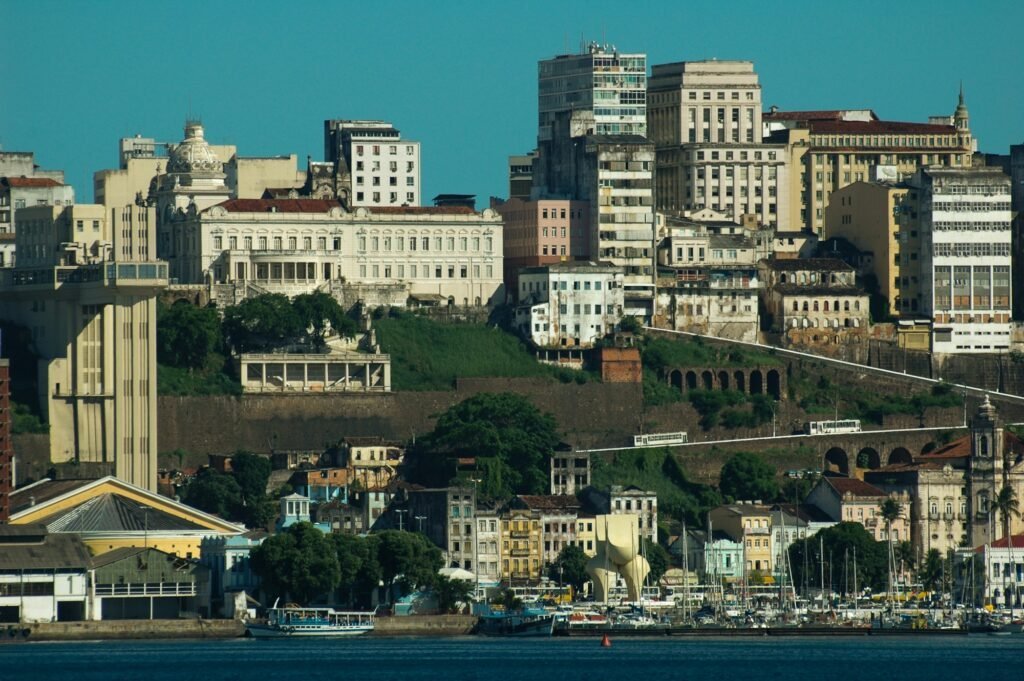
Salvador was built on cliffs, the original city perched forty meters above the port below. The Lacerda Elevator connects lower city to upper city in thirty seconds, but the older route is Ladeira da Montanha, a steep climb past vendors selling caipirinha in plastic cups and men offering “tours” that mostly involve taking you to their cousin’s restaurant. The climb is punishing in heat that stays above 26°C (79°F) even when the sun is low. At the top, you arrive winded at Praça Municipal, where the governor’s palace faces the bay and cruise ships anchor far enough out that they look decorative.
The Pelourinho neighborhood spreads from here, a UNESCO site since 1985. The designation brought restoration money and also brought souvenir shops that sell the same mass-produced Bahiana dolls and berimbaus, the single-string instruments used in capoeira. You will see capoeira demonstrations in Terreiro de Jesus square, often staged for tour groups. The movements are genuine, the kicks and escapes that enslaved people disguised as dance to practice fighting, but the framing is commercial. Better to find the academies in side streets where teenagers train seriously and the only audience is whoever walks past.
Rua Gregório de Matos runs parallel to the main tourist corridor and gets half the foot traffic. Here the buildings are less restored, laundry hangs from iron balconies, a woman sweeps her doorstep at the same hour you pass each morning. At number 33, a small doorway opens into a Candomblé terreiro. You are not invited inside unless you have a specific reason or introduction. The religion is not performed for outsiders. But you see initiates coming and going, white beads for Oxalá, red and white for Xangô. You smell the dendê oil and incense. The city’s spiritual life happens behind these doors, in Portuguese and Yoruba, following liturgical calendars that have nothing to do with the church bells that ring every hour from São Francisco.
The Church and the Gold It Hoards
Salvador
São Francisco is the argument for entering colonial churches even when you resent the project that built them. The interior holds more than 100 kilograms of gold leaf, applied in the eighteenth century when sugar money was trying to buy heaven. Every surface gleams. Cherubs crowd the ceiling. Azulejo tiles from Portugal cover the walls with blue and white scenes of Saint Francis’s life. It took sixty years to complete and it shows.
The gold came from Minas Gerais, mined by enslaved people who never saw the interior it decorated. The irony is too obvious to need stating but it sits there anyway, heavy in the incense-thick air. You pay R$10 (USD $2) to enter. A sign asks you not to photograph. Most people photograph. The church is still used for Mass but its primary function now is as monument to the wealth that slavery generated and the architecture that wealth demanded.
Next door, the Igreja da Ordem Terceira de São Francisco has a sandstone facade carved with such detail that it looks like lace. Birds nest in the upper carvices. The stone is weathering badly, soft in the salt air, but the carving is still legible: shells, grapes, angels, symbols of a European paradise transplanted to a coast that was already occupied. The church is quieter than São Francisco, fewer tours, cooler inside.
What Stays When You Leave
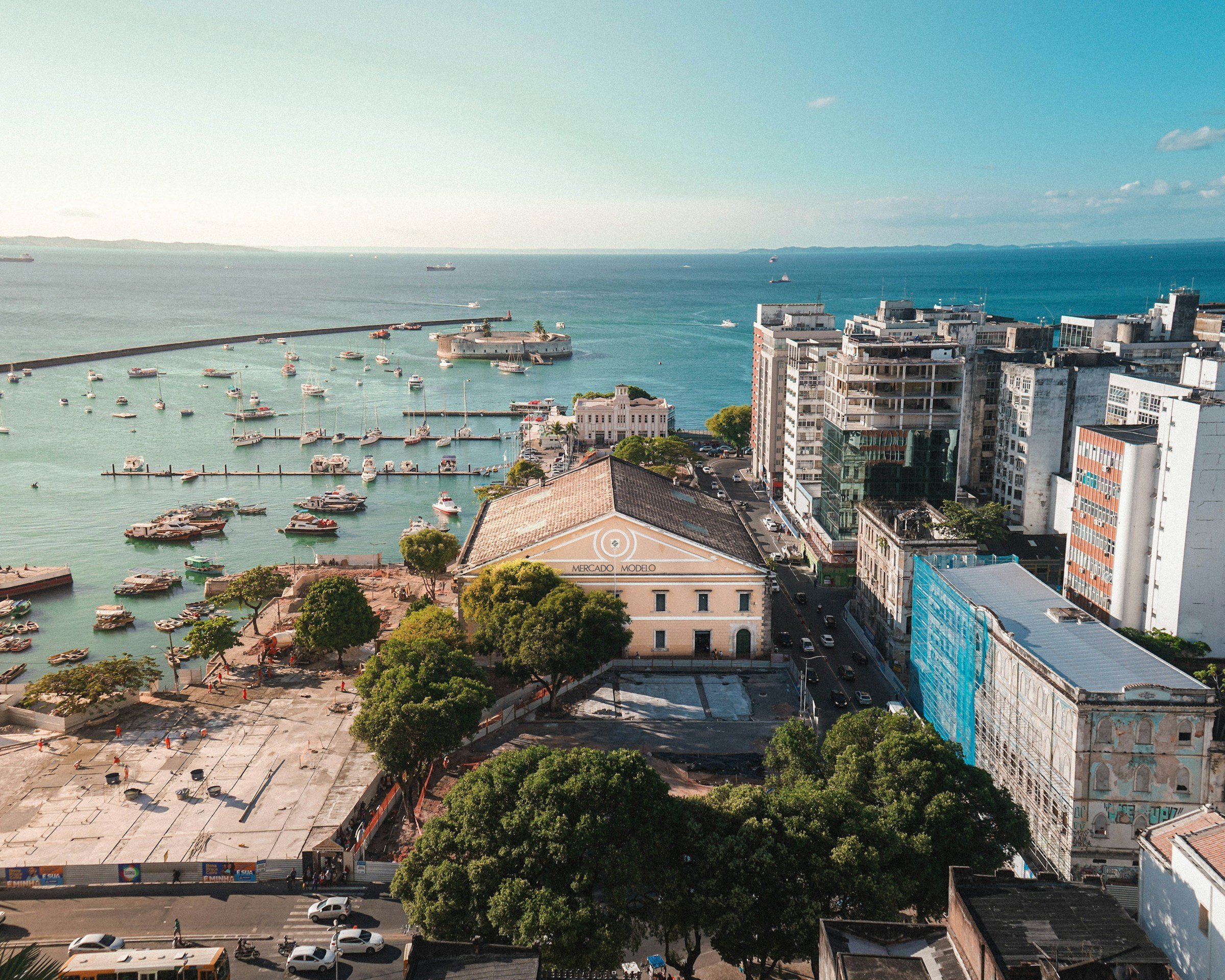
On your last morning you walk through Mercado Modelo near the port. Stalls sell cashew liquor, handmade lace, wooden carvings of orixás that are souvenir and sacred object depending on who buys them. The vendors call to you in English, Portuguese, sometimes Italian. The building is a 1912 customs house converted to market. Before that, it was the site of the slave market. A small plaque notes this. Most tourists do not see it.
You buy a figa, a carved wooden hand making a protective gesture. The vendor wraps it in newspaper. Outside, a man plays berimbau badly for tips. The ferry to Itaparica leaves from the terminal behind the market, R$6.50 (USD $1.30) for the crossing. From the water, Salvador’s upper city looks like every postcard, pastel and picturesque. The lower city shows its warehouses, its working port, the infrastructure of a place that still moves goods and people and has not yet been fully converted into backdrop.
What stays with you is not the gold or the views but the specific friction of a place where the symbols of oppression and the expressions of survival occupy the same physical space. The drumming in the square. The saints on the altar who are also orixás. The acarajé sold in front of the church. Salvador does not resolve this tension. It insists on it, makes you live inside it, feeds you through it. The city does not ask you to forget what the stones remember. It asks you to hear what still gets sung between them.
If you liked this, you might like: Santiago, Medellin, Rio de Janeiro.
Planning the trip? Compare hotel deals before you book.