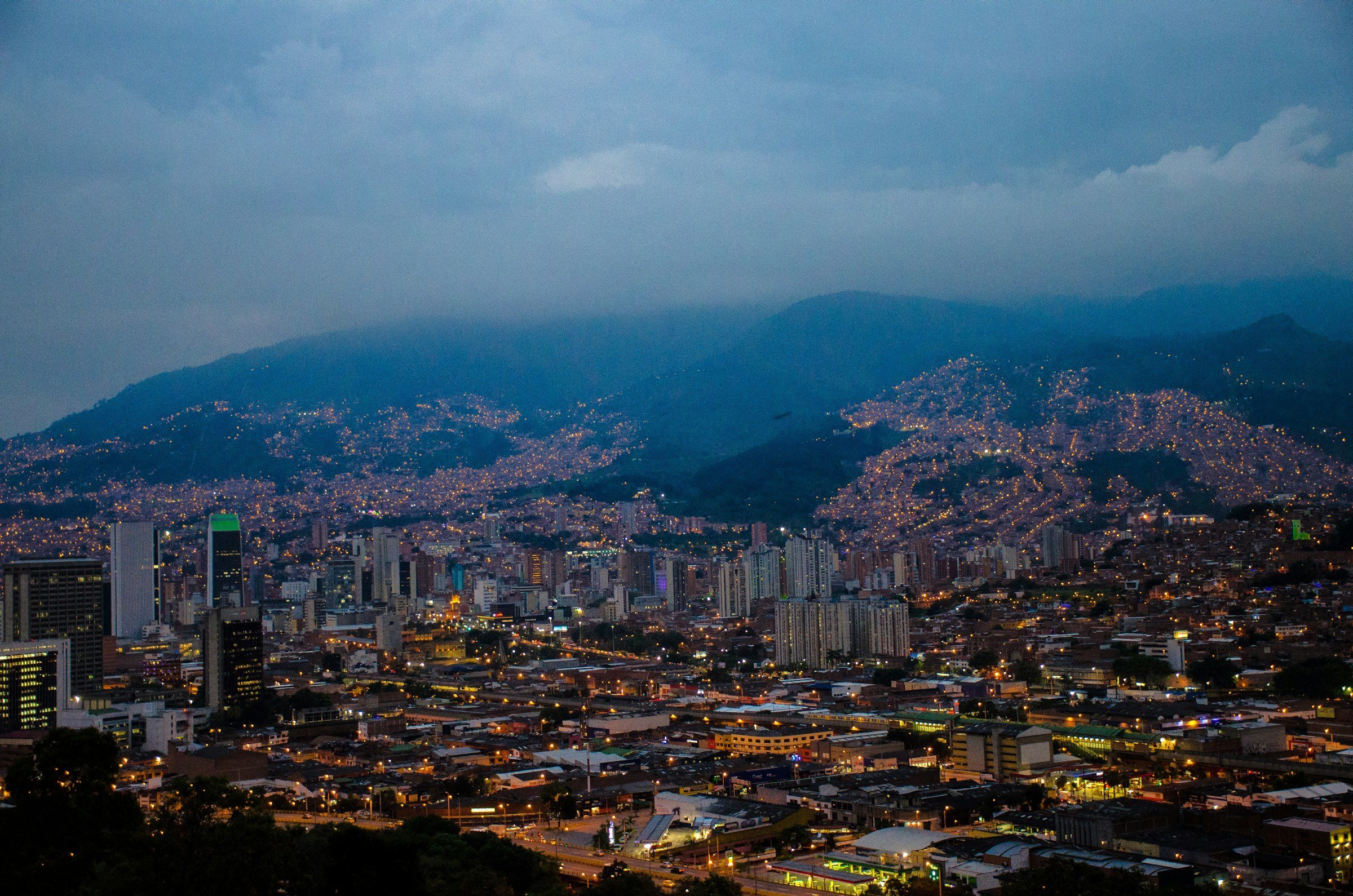
01. The Green Line Rises at Dawn
You board the Metrocable at Santo Domingo Savio station before the sun clears the eastern ridge. The cabin smells like soap and coffee breath. A woman in a hospital uniform sits across from you, her shift ending as yours begins. Below, the barrio wakes in layers: a man hosing down his front step, smoke rising from a breakfast grill, a dog chasing its shadow down an alley too narrow for cars.

This cable car is not a tourist attraction pretending to be transit. It is transit that tourists happen to ride. The K Line opened in 2004, cutting a commute from ninety minutes of switchback bus rides to eleven minutes of straight uphill flight. Before the cables, residents of Santo Domingo walked an hour each way or paid three times the fare for illegal motorcycle taxis that sometimes crashed on wet corners.
The city built these lines into the poorest neighborhoods first. Not as charity but as infrastructure. The stations are clean. The cabins arrive every few minutes. Nobody checks if you live here or if you are just riding for the view. The fare is 3,100 pesos (around $0.75), same as the metro below.
At Acevedo station you transfer to the metro itself, the only subway system in Colombia. The trains are Korean-built, the platforms are Swedish-designed, and the whole operation runs on a point system where punctuality and cleanliness earn bonuses for workers. Graffiti gets removed within hours. Pickpockets operate but not in the brazen clusters you find in Lima or Quito.
02. Biblioteca España and the Problem It Solved
The library sits on a hillside in Santo Domingo like three black boulders that fell from space. Designed by Giancarlo Mazzanti, it opened in 2007 with the specific goal of placing high-quality public architecture in a neighborhood the city had written off during the cartel wars. The exterior is all dark stone and angular shadow. Inside, light pours through narrow skylits onto rows of computers where teenagers do homework and older men read newspapers they do not have to pay for.
You can argue about whether a library stops violence. The homicide rate in Santo Domingo dropped after the Metrocable and the biblioteca arrived, but correlation is not causation and the paramilitaries were also losing ground by then. What is not arguable: the library gets used. On weekday afternoons every seat is taken. Local teachers bring classes here. The third floor has a small auditorium where community meetings happen without anyone needing to rent space or ask permission from a church.
The building is not perfect. Maintenance has been inconsistent. Some of the exterior panels have water damage. A few of the computers are older than they should be. But it remains a third place in a neighborhood that had mostly homes and corner stores, and third places matter when your apartment is small and your options are limited.
From the library’s terrace you can see the full scope of the metrocable network: lines stretching east and west and north, connecting barrios that used to be afterthoughts. The city’s planning department calls this “social urbanism”, a term that sounds like jargon but translates to something simpler. Put the best infrastructure in the places that need it most, then see what grows around it.
03. Parque Explora and the Science of Not Lying to Kids
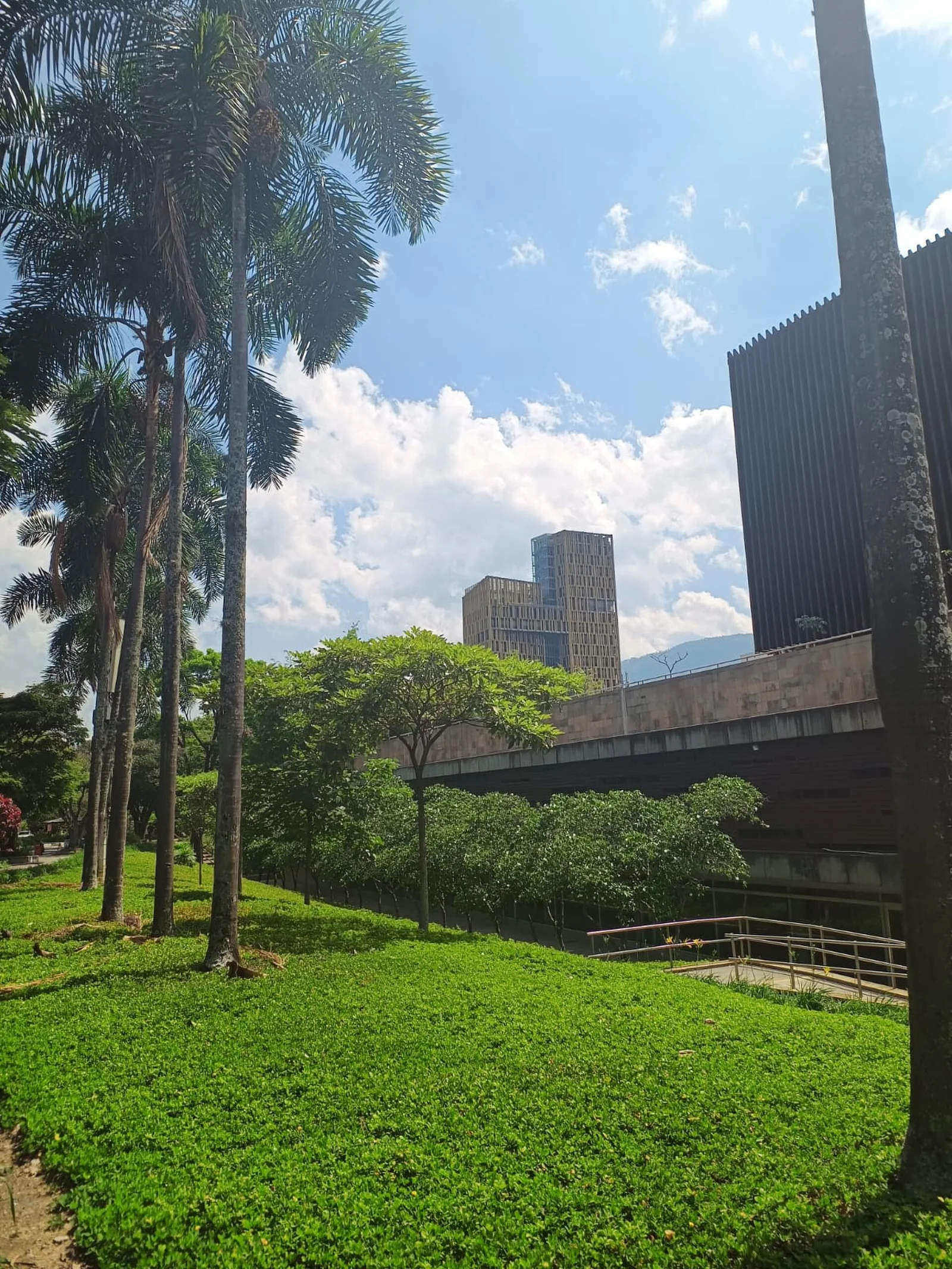
Medellin
The interactive science museum sits next to the botanical garden in a neighborhood that was industrial wasteland twenty years ago. Parque Explora does not talk down to children. The aquarium on the first floor holds Amazonian fish in tanks that explain why pirañas are mostly scavengers and why electric eels are not actually eels. The physics exhibits let you break things on purpose to understand tension and compression.
Admission is 32,000 pesos ($8) for adults and cheaper for students. School groups from the comunas arrive on the metro, their teachers corralling them through exhibits on ecosystems and human anatomy and the actual size of the solar system, which is demonstrated with a scale model that starts in the lobby and ends three blocks away at a tiny Pluto mounted on a lamppost.
The planetarium shows films in Spanish about black holes and the search for exoplanets. The dome tilts your perspective until you forget which way is up. A guide explained to a group of ten-year-olds that light from distant stars takes so long to reach us that we are always looking into the past. One kid asked if that meant the stars might already be dead. The guide said yes, some of them are, and that is one reason we keep building telescopes.
This is a city that spent decades being known for one man and one product. The fact that it now builds museums that do not mention either is not avoidance. It is simply moving on.
04. The Old Gondolas Rusting Near Arví
The Metrocable L Line runs from Santo Domingo all the way to Parque Arví, a nature reserve on the far eastern edge of the valley. The ride takes twenty minutes and climbs over forests that turn misty by afternoon. At the top, vendors sell arepas and hot chocolate near trailheads that lead into cloudforest.
But halfway up the line, if you look down and to the left, you can still see the old cable car system rusting in the trees. Those gondolas were privately run, unregulated, dangerous. They carried workers and their goods up the mountain for decades before the city replaced them. Nobody tore them down. They just hang there, vines growing through the windows, metal frames going orange with rust.
A local guide pointed them out once and said they are kept as a reminder. The city wants people to remember what transit used to look like when it was profit-driven and unaccountable. The new system costs more to run but is paid for by fares and taxes. Nobody gets rich from it. Nobody dies from it either.
The park itself is pleasant but not extraordinary. There are trails, picnic areas, a weekend market selling wool blankets and farmer cheese. What is extraordinary is that the cable car brought you here for the same fare it costs to cross the city. That is the design choice. Access is not a luxury. It is infrastructure.
05. What the Maps Do Not Show
The Metrocable lines appear on every transit map as clean colored threads stitching the valley together. What the maps do not show: the stations are also community centers. Several have small clinics. One has a police substation that is actually staffed. Another has meeting rooms that local organizations can reserve for free.
The city did not solve poverty by building cable cars. Violence still flares in certain barrios. Unemployment remains high. But the transit system made a promise and kept it. If you live on a hillside an hour from work, the city will not leave you there. It will send a cabin every three minutes and charge you less than a dollar to ride it.
That is not inspiration. It is just policy. But policy implemented well starts to feel like dignity, which is harder to measure and easier to feel when you are standing on a platform watching the next cabin approach on time.
If you liked this, you might like: Playa del Carmen, Cancun, Santiago.
Planning the trip? Compare hotel deals before you book.