Your lungs will betray you in the first fifteen minutes
You step off the plane at El Alto and your body immediately begins a negotiation it has never had before. The air contains 40% less oxygen than your cells expect. Walking from the gate to the baggage claim feels like sprinting uphill. Your heart pounds. Your fingers tingle. The Bolivian grandmother beside you, carrying two overstuffed bags, moves at normal speed while you stop twice to catch your breath.
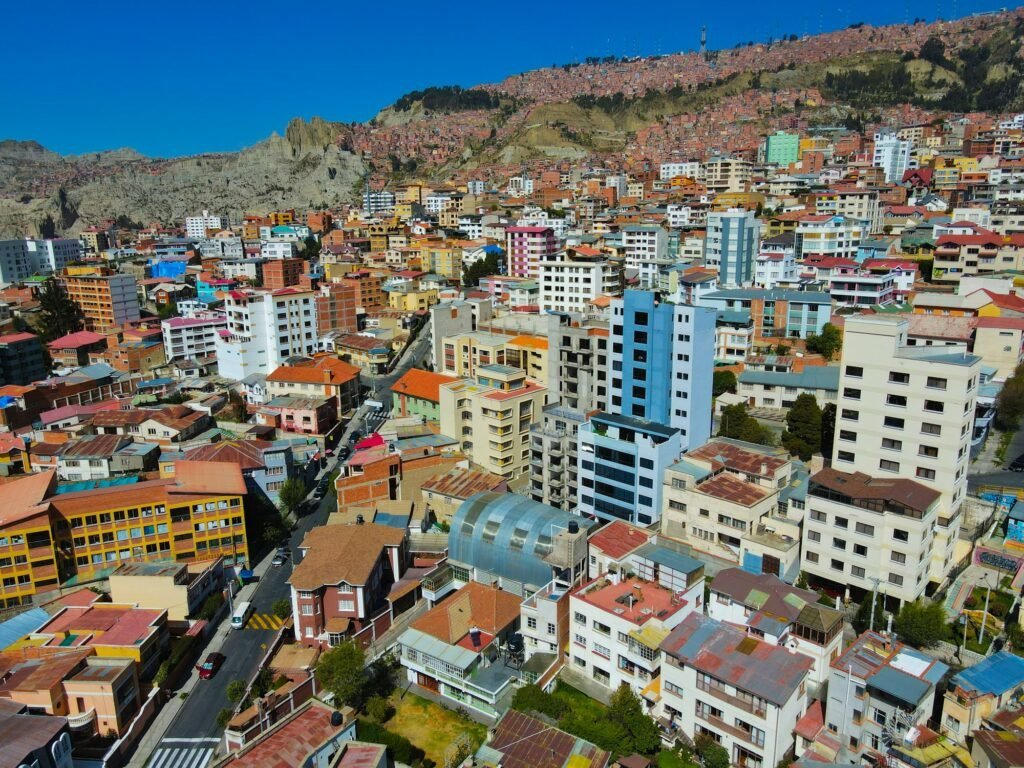
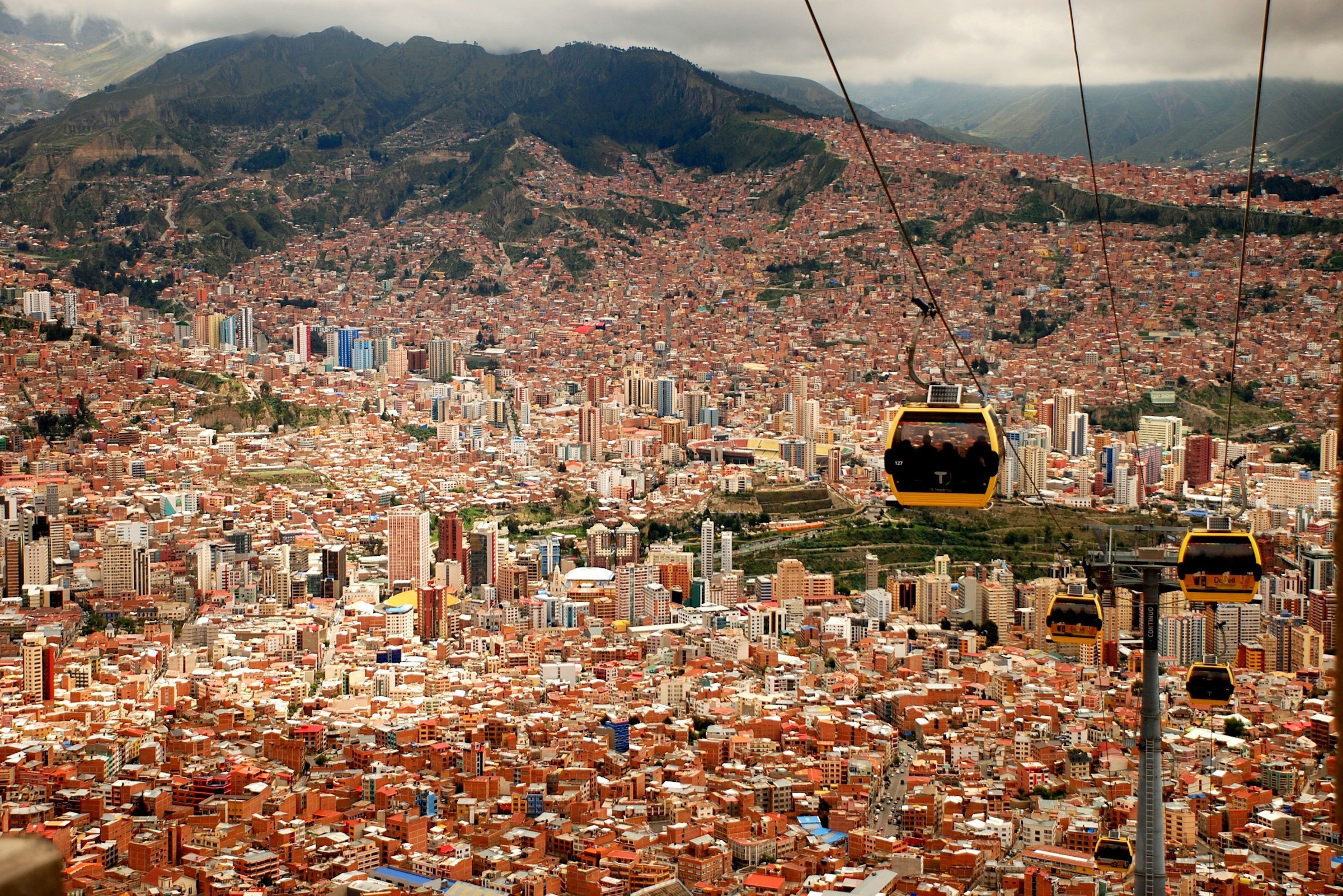
This is not metaphor. La Paz sits in a bowl carved into the Altiplano, with neighborhoods cascading from 13,600 feet down to 10,600 feet. The wealthy live at the bottom where breathing comes easier. The poor occupy El Alto’s windswept plateau where oxygen is a luxury no one can afford to think about.
Spend the first two days doing almost nothing. Walk slowly. Skip alcohol entirely. Drink coca tea, which tastes like lawn clippings but delivers a mild stimulant that indigenous people have used for millennia. The hotel will offer it in the lobby. Accept.
Buildings here have lungs
Freddy Mamani’s neo-Andean cholets dominate El Alto’s skyline, and their design accounts for altitude in ways you won’t notice until someone points them out. These bright lime-green and hot-pink towers feature massive ground-floor event halls with 20-foot ceilings. The upper floors hold apartments and rental spaces. Every building has oversized windows, not for views but for airflow.
At this elevation, enclosed spaces turn stale fast. Bodies consume oxygen faster and produce more CO2. A room that would feel fine at sea level becomes suffocating within an hour. Mamani’s event halls host weddings for 500 people, all breathing hard from dancing at altitude. Without those soaring ceilings and strategic ventilation, guests would start fainting before the cake arrives.
Even colonial buildings from the 1600s show this logic. The San Francisco Cathedral has unusually thick walls and small, high windows. The stone stays cool, reducing the body’s need for extra oxygen to regulate temperature. Spanish architects learned fast that European designs killed people here.
Food chemistry changes when water boils at 187°F
At sea level, water boils at 212°F. In La Paz, it boils at 187°F because of reduced atmospheric pressure. This makes cooking a different science.
Pasta takes 45 minutes instead of 8. Beans require pressure cookers or overnight soaking plus three hours of simmering. Rice never quite softens. Baking a cake means adjusting every ratio because moisture evaporates faster and leavening agents behave erratically.
Locals adapted by developing dishes that work with these constraints. Saltenas, the breakfast empanadas sold from street carts between 10am and noon, use a specific dough that can handle low-temperature baking. The filling’s gelatin-thickened broth stays liquid during cooking, then solidifies just enough when it cools. Bite wrong and the scalding juice runs down your chin.
Anticuchos, skewered beef heart grilled over charcoal, cook through direct heat instead of boiling or steaming. The meat’s texture at altitude is perfect: chewy but not tough. You’ll find the best ones near the Cementerio General after dark, sold by women who have worked the same corner for decades. They cost 15 bolivianos (about $2.20) for three skewers.
Time dilates in the afternoon
La Paz
Between 1pm and 4pm, the city enters a fugue state. Your body, already working overtime to oxygenate itself, hits a wall. Locals call this the “soroche slump” though they rarely admit to feeling it themselves. Tourists interpret it as laziness when shops close or meetings get rescheduled, but the physiology is unavoidable.
At altitude, your metabolism runs 20-30% faster just to maintain basic function. By early afternoon, you’ve burned through your calorie reserves. Glucose levels drop. Cognitive function slows. Trying to make complex decisions at 2pm feels like thinking through syrup.
This is why serious business happens in the morning. Court hearings, government offices, bank appointments: all scheduled before noon. The afternoon belongs to lunch (eaten slowly), coca tea, and waiting for your body to build back enough energy for the evening.
Tourists who fight this rhythm spend three days exhausted and confused. Locals who’ve lived here for generations still structure their days around it. The altitude doesn’t care about your productivity goals.
Dehydration is not what you think it is
You will drink more water than ever in your life and still wake up with a splitting headache. The air here is brutally dry, often below 20% humidity. Your body loses moisture through every breath, and at altitude you breathe faster and deeper without noticing.
The standard advice is to drink four liters of water daily. This sounds absurd until your lips crack and your urine turns dark amber by noon. But here’s what no guidebook mentions: chugging water doesn’t work. Your kidneys, already stressed by altitude, can’t process sudden floods of liquid. You’ll urinate out most of it within 30 minutes.
Instead, sip constantly. Carry a bottle everywhere. Drink coca tea between water sessions. Eat soup. Api, a hot purple corn drink sold by street vendors for 3 bolivianos (about $0.45), hydrates better than plain water because of its sugar and starch content.
The locals drinking beer at 3pm in a football jersey are not hydrating. They’re playing a different game with their acclimatized bodies. Don’t try to match them.
The cable cars exist because buses can’t breathe either
La Paz’s Mi Teleférico system, with its ten color-coded cable car lines, is not a tourist attraction. It’s essential infrastructure built for an altitude-specific problem: combustion engines lose 30% of their power in thin air.
Buses climbing from Zona Sur to El Alto would overheat constantly. They’d burn twice the fuel and break down on steep sections where there’s no shoulder to pull over. The old system had vehicles lined up for half an hour on Avenida Buenos Aires, pouring black smoke while passengers pressed against windows.
The cable cars bypass all of it. An electric motor at the station does the work. The cabins glide over traffic at 18 feet per second, making the El Alto to city center run in 17 minutes instead of 90. It costs 3 bolivianos (about $0.45) per ride regardless of distance.
The view is spectacular, yes. But you’re riding a solution to an engineering problem that only exists at this elevation. Every city has its constraints. La Paz wears its 12,500 feet openly.
If you liked this, you might like: Salvador, Santiago, Cusco.
Planning the trip? Compare hotel deals before you book.