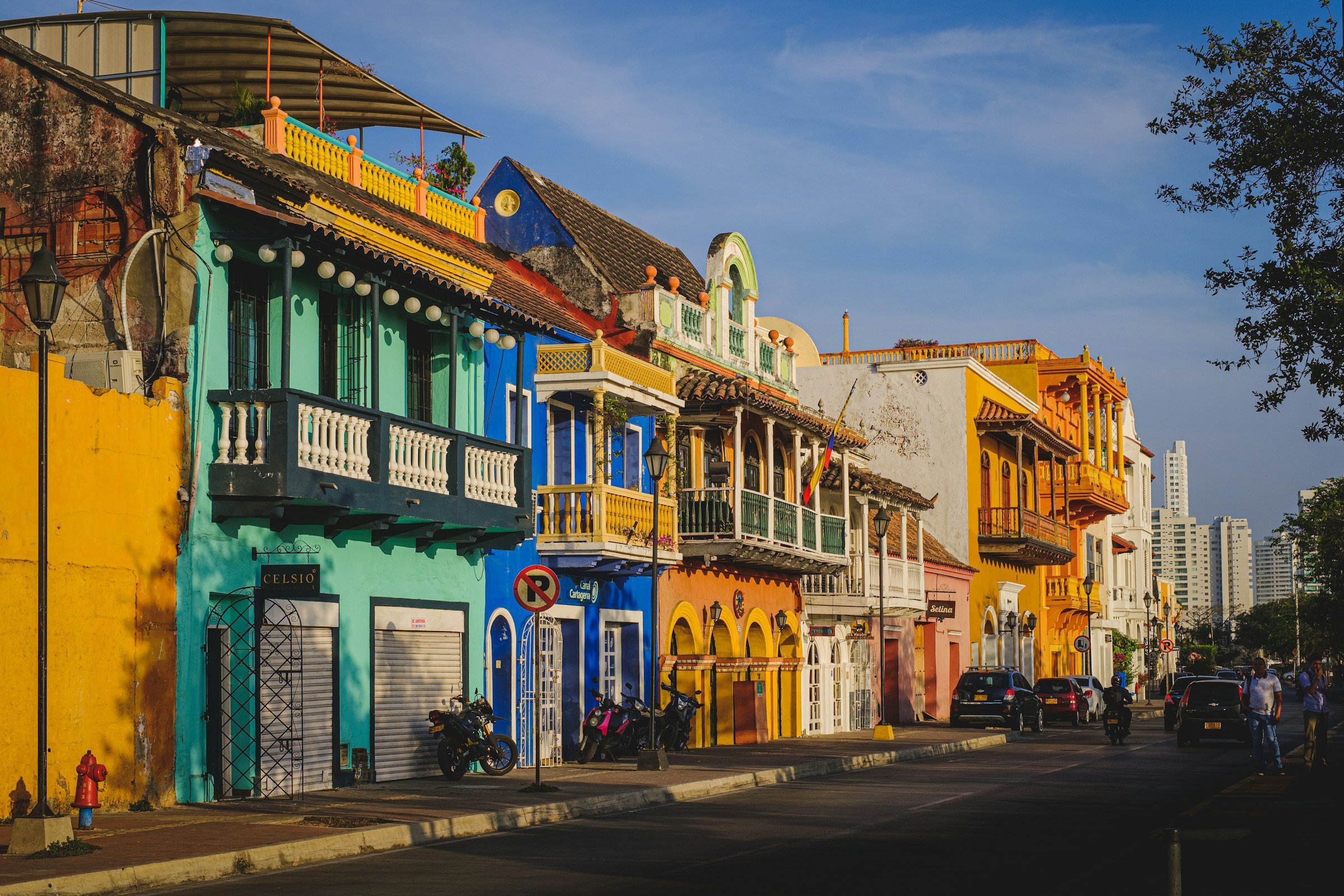
If You Think Cartagena Ends at the Walls
The postcards show colonial balconies dripping bougainvillea. You book an Airbnb inside the walled city, congratulate yourself on finding the real Cartagena, and never look up from the cobblestones. A month later you realize you saw a film set, not a city. The other Cartagena, the one with three million people, was always there. You just never turned your head.

Cartagena
The centro historico occupies maybe two square kilometers. Getsemaní pushes against its southern edge, gentrified now but still claiming a separate identity. Beyond that begins the sprawl: Manga, Crespo, Bocagrande, neighborhoods that ignore the tourism economy entirely. They have their own problems. Traffic that strangles Avenida Pedro de Heredia for hours. A bus system everyone complains about but keeps riding. Street vendors selling arepas de huevo for 3,000 pesos ($0.75) instead of the 15,000 ($3.75) you paid near Plaza Santo Domingo.
The walled city pretends the rest doesn’t exist. Restaurant menus in four languages. Emerald shops on every corner. Horse carriages clip-clopping past the same cathedral for the hundredth photo op. It works because tourists rarely leave. The heat helps. By noon you want ice cream and shade, not exploration. You retreat to your boutique hotel, the one with the plunge pool and complimentary mojitos, and convince yourself you’ve seen enough.
If You Assume Colonial Means Authentic
Most of the old city was rebuilt. The fortifications are real, sure. Las Murallas took two centuries to finish and they held off enough pirates to justify the expense. But walk through the neighborhoods behind them and you’re seeing restoration work from the 1980s onward. UNESCO designation brought money. Money brought paint, new tile, ironwork that looks appropriately weathered. It’s genuine in the sense that it follows original plans, but you’re not touching stones that have stood untouched since 1650.
Getsemaní tells a different story. That neighborhood housed the workers, the free Black population, the people who built the walls but didn’t live behind them. For decades it stayed rough. Families who’d been there for generations paid almost nothing in rent. Then came the murals, the boutique hostels, the rooftop bars. Now a two-bedroom apartment rents for more than most Cartageneros make in a month. The old residents? They moved to Olaya Herrera, to Fredonia, to neighborhoods you won’t find on tourist maps.
You want authentic, walk east from Torre del Reloj until the tour groups thin out. Keep going past the jewelry stores until you hit the market at Bazurto. It smells like fish and overripe plantains. Nobody speaks English. The prices make sense again. This is where the city buys groceries, where vendors argue over tomato quality, where you can eat sancocho de mondongo for 12,000 pesos ($3) and it’s the version someone’s grandmother has been making for forty years. Authentic doesn’t mean pretty.
If You Think the Beach Defines the Experience

Cartagena
Bocagrande’s high-rises block the sunset. The beach there is narrow, the water murky, the sand tracked over by a thousand feet before you arrive. You pay 40,000 pesos ($10) for a chair and umbrella, double if you want it closer to the water. Vendors circle every three minutes offering pineapple slices, massages, hats, sunglasses, corn on the cob. Saying no becomes a reflex.
The city sold you the idea of Caribbean paradise, but what you get is urban coastline. The real beaches are an hour away. Playa Blanca requires a boat, costs three times what you budgeted, and arrives packed with day-trippers who had the same idea. The Rosario Islands look better in photos than in person. Isla Grande has potential but you’ll share it with fifty others from your boat.
The locals who can afford it skip all of this. They drive to Barú, to Playa Cholón, to spots that require knowing someone who knows someone. Or they don’t bother with beaches at all. On weekends they’re at the malls in Crespo, at the soccer fields in Manga, at family gatherings in neighborhoods that built up during the oil boom and haven’t stopped since. The beach is for tourists and for the vendors who extract money from them.
If You Believe the Two Cities Stay Separate
They bleed into each other in ways you don’t notice until you look. The workers who sweep the cobblestones at dawn, who clean the boutique hotel rooms, who serve ceviche to cruise ship passengers, they all live in the sprawl. They take the bus for an hour, sometimes longer when traffic snarls. They pass through the Puerta del Reloj into the preserved zone, work their shift, then reverse the commute. The money flows one direction. The workers flow the other.
Manga used to be where the wealthy built weekend houses. The old mansions are still there, fading now, split into apartments or offices. The neighborhood has a genteel exhaustion to it. Tree-lined streets. Quiet. Nobody’s selling you anything. It’s fifteen minutes by taxi from the old city but feels like a different country. You could spend a week in Cartagena and never cross the bridge into Manga. Most tourists don’t.
The gap keeps widening. A meal inside the walls costs what a family in Olaya spends on groceries for a week. A hotel room in centro goes for more than a month’s rent in the outer barrios. The preservation economy depends on this separation. Keep the tourists in the pretty zone, keep the workers out of sight, maintain the illusion that what you’re seeing is all there is.
But walk the perimeter at dusk. Stand where the walls meet the bay and look back toward the city. The walled section glows under careful lighting, every stone illuminated. Beyond it the sprawl spreads in every direction, streetlights and traffic and the ordinary chaos of a city that has to function. Both are Cartagena. The brochure only shows you half.
If you liked this, you might like: Granada, Santiago, Sao Paulo.
Planning the trip? Compare hotel deals before you book.