When the street ends at a concrete wall
You step off the bus at Plaza Soltero and the city immediately stops making sense. The street climbs for two blocks, flattens for thirty meters, then hits a painted concrete wall. No alley. No staircase. Just a wall with a metal door and a handwritten sign that says “Ascensor Concepción”. This is not a building amenity. This is how you continue walking.

Valparaíso has sixteen functioning funicular elevators built into the hillside like vertical streets. They don’t connect hotel lobbies to penthouses. They connect one neighborhood to another across a hundred meters of near-vertical cliff that nobody could reasonably climb twice a day. You pay 300 pesos (about 30 cents USD) to a man in a booth smaller than a phone box, step into a wooden cabin that smells like motor oil and old timber, and rise at a diagonal through someone’s backyard. At the top, the door opens and you are on a different street entirely, with a different view, different dogs sleeping on different stoops.
The thing nobody tells you is that these elevators are not tourist attractions functioning as transport. They are transport that tourists happen to photograph. Schoolkids use them. Grocery bags use them. A woman with a vacuum cleaner uses Ascensor Espíritu Santo to get home after cleaning an office in the lower port. When Ascensor Polanco breaks down, which it does, the neighborhood above it becomes an island. You can walk down the long way through Cerro Cordillera, a forty-minute detour on cracked sidewalks, or you wait for the repair.
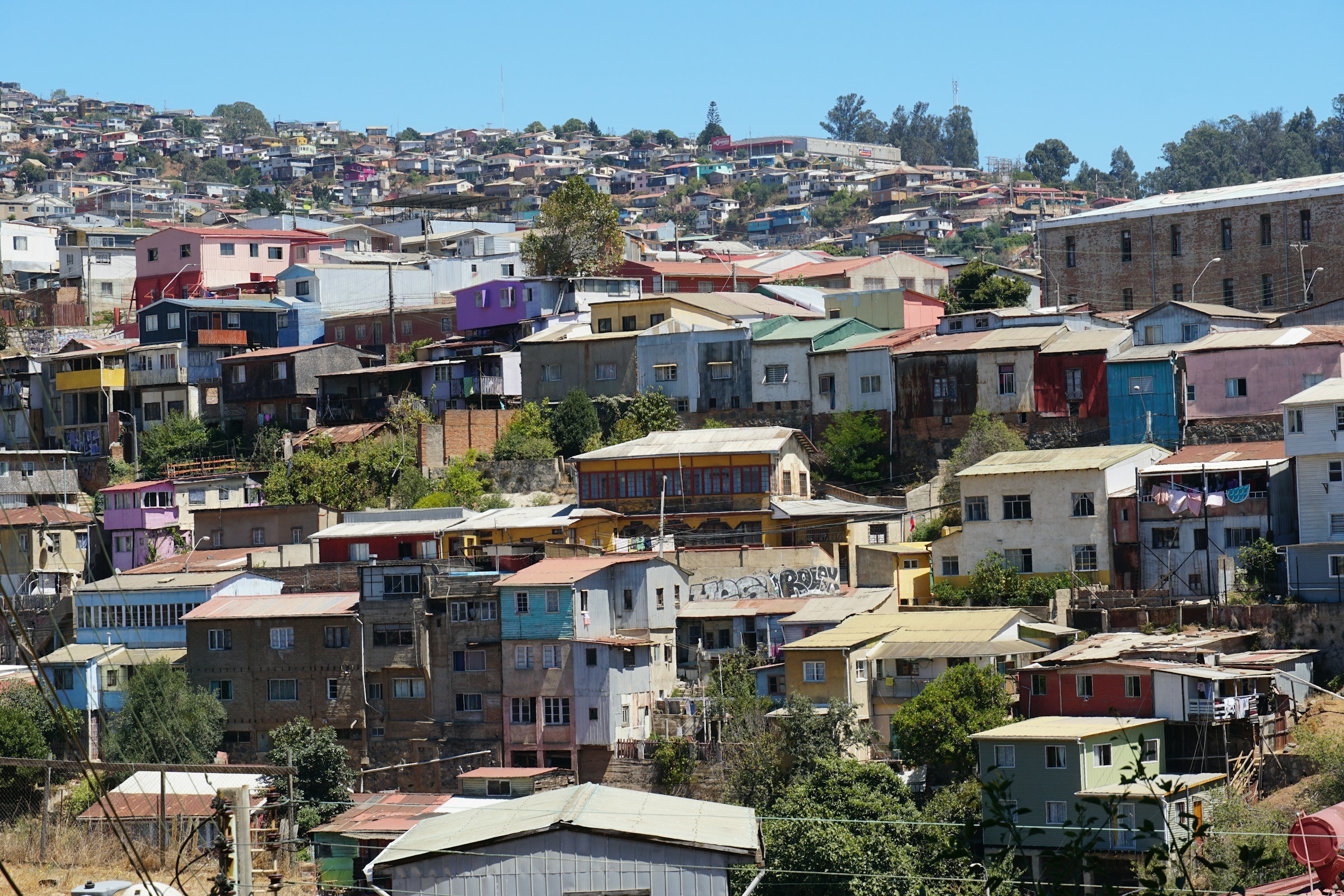
The elevators were built between 1883 and 1916 because Valparaíso grew too fast in the wrong direction. The port exploded with trade before the Panama Canal rerouted everything, and workers built houses straight up the forty-two hills that ring the harbor. No switchbacks. No zoning. Just wooden boxes clinging to slopes that should have stayed empty. The first ascensor, Concepción, was funded by neighborhood subscription. Residents pitched in because walking home from the docks with a week’s groceries meant a thirty-minute climb on stairs slick with ocean mist.
Cerros that function like separate towns
Each hill, each cerro, has a personality that makes “Valparaíso” feel like an incomplete address. Cerro Alegre gets the boutique hotels and the cafe where a cortado costs 2,800 pesos (three dollars). Cerro Concepción gets the murals and the architects from Santiago buying second homes. Cerro Bellavista gets art students and used bookstores where the owner’s cat sleeps on the poetry section. Cerro Polanco gets families who have been there seventy years and can’t afford to move even if they wanted to, which they don’t.
You cannot see one cerro from another without also seeing the port. The geography forces constant orientation. Every view includes water, container cranes, the naval base, the fishing boats with names like “María José III” painted on the hull. This is not picturesque backdrop. The port still works. Trucks haul copper and lithium down Avenida Argentina at five in the morning. The fish market near Muelle Prat opens before dawn and smells the way actual working fish markets smell, which is intensely and without apology.
Street addresses reference the elevators whether they are near them or not. “Two blocks above Ascensor Reina Victoria” is more useful than a formal address because mail carriers and taxi drivers navigate by landmark, not by grid. The grid does not exist. Streets change names every few blocks. Some streets are staircases. Some staircases are streets with painted center lines and stop signs bolted into the risers. Pasaje Dimalow has cars parked on thirty-degree inclines with wheel chocks made from broken bricks.
Why some ascensors stay broken

Valparaiso
Ascensor Monjas has been closed for eight years. The wooden cabin sits at the bottom of the track, door sealed with rusted chains. Neighbors walk past it every day on their way to Ascensor El Peral, five blocks east, which still runs. The city keeps announcing repair timelines, then missing them. The problem is not mechanical. The problem is that restoring a 1906 wooden elevator to modern safety codes costs more than building a new one, but building a new one means destroying the exact thing that made the old one matter.
This tension shows up everywhere. Ascensor Artillería takes you to Paseo 21 de Mayo, a viewpoint where tour groups stop for ten minutes to take photos of the bay. The elevator itself is the newest in the fleet, rebuilt in 1992 with a covered walkway and ticketing kiosks that actually work. It carries more passengers than any other ascensor because it connects to a named attraction. Three cerros over, Ascensor Lecheros carries fifty people on a busy day and runs at a loss. The operator keeps it open because his grandfather operated it, and because the twelve families at the top would have no other reasonable route to the pharmacy.
You start to see why preservation is complicated. Tourists want the ascensors kept exactly as they were in 1910, all exposed wood and hand-painted signs. Residents want them to run reliably in heavy rain and not trap people between floors when the power cuts out, which it does. The city wants them to be both historic monuments and functional infrastructure, a thing that is difficult to budget.
The ride you take just to understand the place
Take Ascensor Polanco specifically. It is the only true vertical elevator in the system, not a funicular. You enter at street level on a nothing block of Calle Simpson, walk through a tunnel carved into the hill for a hundred meters in near darkness, then step into a cabin that rises straight up through a concrete shaft. At the top, you emerge on Pasaje Apolo next to a elementary school and a corner store selling individual cigarettes for 200 pesos. The tunnel stay damp even when it has not rained for weeks. Moss grows on the walls where the LED strip lights don’t reach.
This is the ride that clarifies what Valparaíso actually is. Not a charming hillside town. A port city that built infrastructure around cliffs because moving to flat land was never an option. The ascensors are not whimsical. They are the result of specific geographic problems solved with early twentieth-century engineering by people who could not afford to wait for a better solution. You ride them because the alternative is a forty-minute walk on broken pavement through neighborhoods that have no reason to be connected except by necessity.
When you leave, you will remember the exact sound of the Ascensor Concepción cabin creaking as it starts to move. That sound is not charming. It is wood under load doing what wood under load does after a hundred years. But you will also remember that it runs every day, all day, because a city built on cliffs cannot function without it.