The Weather Makes No Sense Until You Look at a Topographic Map
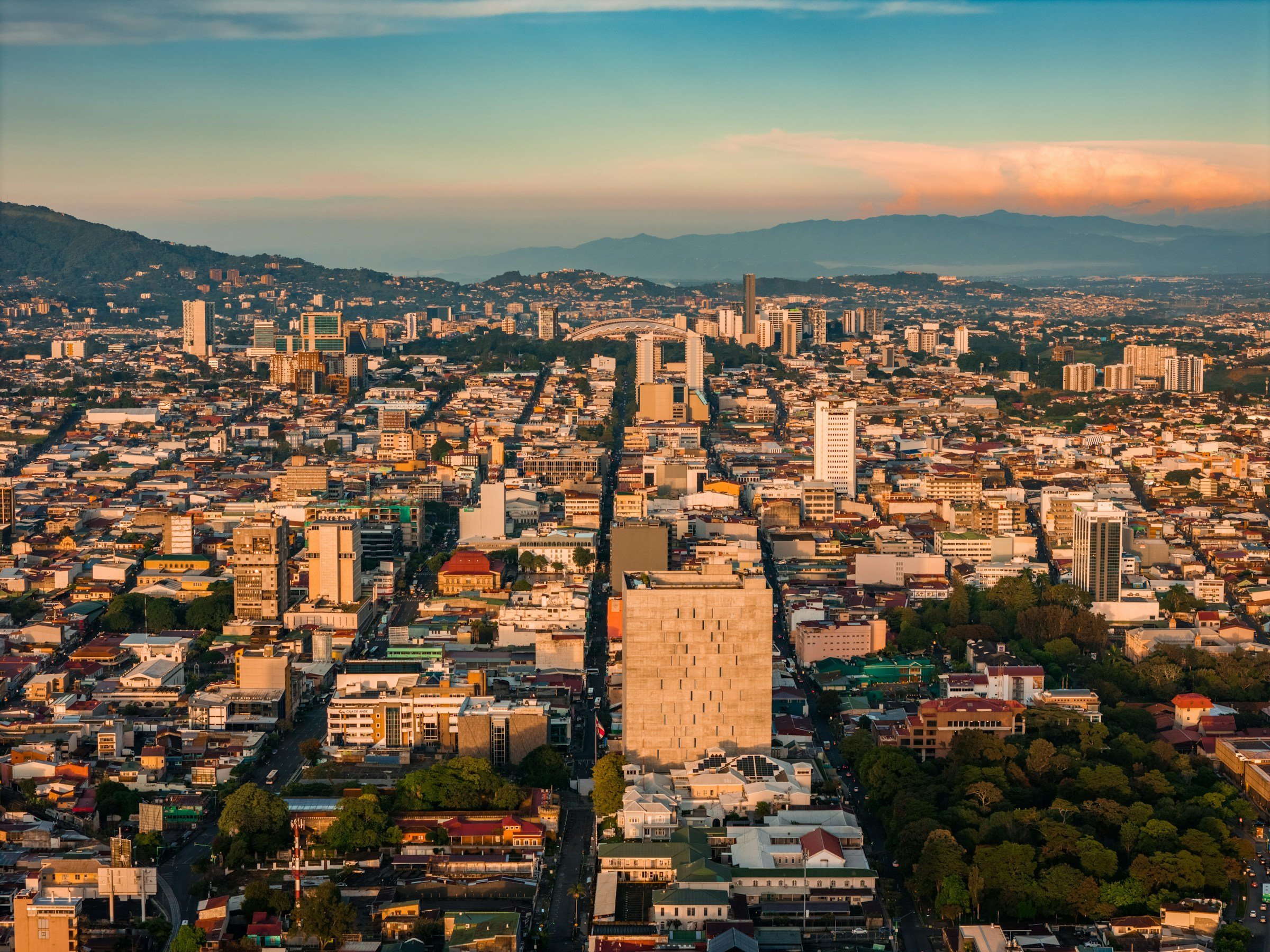
San Jose sits at 1,150 meters in a bowl formed by volcanic ridges. Walk five blocks and you feel like you’re in Seattle. Drive an hour west and you’re in humid beach weather. The disconnect hits hardest when you’re wearing a sweater in the capital while friends text photos from Jaco in swimsuits. This altitude creates something rare in Central America: a place where the afternoon might bring drizzle instead of downpour, where mornings feel crisp rather than sticky. The clouds roll in predictably but never quite the same way twice. Some days they hang low over the Barrio Escalante cafes. Other days they clear out by noon and you remember there are actual mountains surrounding this valley. Most guidebooks call it “eternal spring,” which sounds nice until you realize it also means you never get that sharp seasonal shift that marks time passing.

San Jose
The Central Market Operates in a Permanent 1970s
Mercado Central has the specific fluorescent glow and concrete acoustics of a building that refuses to update. You walk in from Avenida Central and immediately lose your sense of what year it is. The butcher stalls display whole chickens the way they’ve displayed them for decades. The spice vendors sit behind identical pyramids of cumin and achiote. Three different stalls sell bags of cas, a sour fruit nobody bothers explaining to tourists because if you don’t already know what to do with it, the vendors aren’t interested in teaching you. I’ve watched people spend twenty minutes looking for “authentic local food” and walk right past the sodas where office workers eat casado for 3,500 colones (six dollars). The thing about this market: it doesn’t perform tradition. It just continues operating while the world outside argues about authenticity. Go to Soda Tapia near the northwest entrance. Order whatever the handwritten sign says. Eat standing at the counter like the taxi drivers do.
Barrio Amon’s Architecture Got Frozen Mid-Gentrification
These blocks north of downtown have the specific stalled quality of a neighborhood that started getting renovated fifteen years ago and then paused. Victorian-era coffee baron houses sit next to hostels next to law offices next to actual residents who never left. Some mansions became boutique hotels. Others are just big houses with peeling paint and families inside. Walk down Avenida 9 and you’ll pass a restored mansion that’s now a museum, then a near-identical building that’s divided into apartments with laundry hanging on the balconies. The neighborhood doesn’t commit to being either historic district or living community, so it ends up as both and neither. The best time to see this tension is late afternoon when the tour groups have left and the corner stores are selling beer to people who actually live here. The fog that settles into these streets by evening makes every iron fence and cracked tile feel like a photograph from a decade you can’t quite place.
Nobody Stays Long But Everyone Knows Someone Who Does

San Jose
San Jose has this odd position as the city people fly into, spend one night, then leave for Arenal or Manuel Antonio. The hostel conversations in Barrio Escalante follow a script: where are you going, how long there, when do you fly out. I’ve met more long-term expats in San Jose than in any beach town. English teachers. Remote workers who realized Escazu has fiber internet and costs half what Mexico City does. Retirees who bought condos in Rohrmoser back when that seemed like a strange choice. These aren’t people on a gap year. They’re the ones who stayed because the weather never pressures you to leave, because you can get good coffee and ignore the tourist trail completely, because the mountains create a sense of being tucked away that’s hard to find in beach towns where everything’s always visible and sunny. The city doesn’t pitch itself to these people. It just quietly accommodates them.
The Gold Museum Sits Beneath a Plaza Like a Climate-Controlled Secret
Most capital cities put their pre-Columbian gold in columned buildings with grand staircases. Costa Rica buried theirs underground beneath Plaza de la Cultura. You descend into artificial light and controlled humidity while tourist groups take photos of the National Theater above you. The collection holds pieces from cultures that existed before Spanish contact, arranged in cases that tell you very little about context and everything about craft. Frog pendants. Eagle figures. Ceremonial objects whose exact use remains disputed. What gets me is how the museum’s location mirrors San Jose’s relationship with its own history: tucked away, preserved carefully, separated from the street-level present by literal tons of concrete. You can spend an hour down there and emerge to find the plaza exactly as you left it, the same fruit vendors and mime performers, as if those gold frogs exist in a separate timeline that only intersects with the present through a basement entrance most people walk past.
The Bus System Runs on Collective Memory Instead of Maps
San Jose gave up on comprehensive bus maps years ago. Routes change. Companies merge. The city expects you to ask. Every bus stop has clusters of people who know which bus goes where, and they’ll tell you if you ask in Spanish. The system works through oral tradition. Buses display neighborhood names on the windshield, not route numbers that mean anything to visitors. You learn that “Sabana” buses head west, that anything saying “San Pedro” goes toward the university, that the buses to Escazu leave from near the Coca-Cola terminal which hasn’t been called that officially in decades but everyone still uses the old name. It’s a system designed for people who live here, which sounds obvious but most tourist cities have made at least token efforts toward legibility. San Jose hasn’t bothered. Take bus 400-02 to the Central Valley viewpoint in Escazu (around 600 colones). Stand near the driver and ask the other passengers to tell you where to get off. You’ll be told exactly where, by someone who’s made this trip hundreds of times and finds your uncertainty completely understandable.
The City Ends Without Warning at Literal Mountain Walls
Drive south from downtown and you hit the mountains of Escazu in fifteen minutes. North takes you into coffee plantations that climb slopes toward Barva. East runs into Cartago and the foothills before Irazu. The valley has hard edges. This isn’t a city that sprawls indefinitely into suburbs. It stops when it hits geology. That physical containment creates the perpetual sense that you’re inside something, that the clouds and moderate temperatures are features of this specific basin rather than general climate patterns. Stand anywhere with a view in the city and you see the boundaries. The peaks aren’t distant backdrop. They’re the walls of the room you’re in. When the clouds sit heavy on those ridges, the city feels smaller, more enclosed. When they lift, you remember you’re in Central America, that the Caribbean is eighty kilometers that direction and the Pacific is similar distance the other way, and that this temperate valley is the anomaly, not the coasts.
If you liked this, you might like: Guatemala City, Salvador, Panama City.