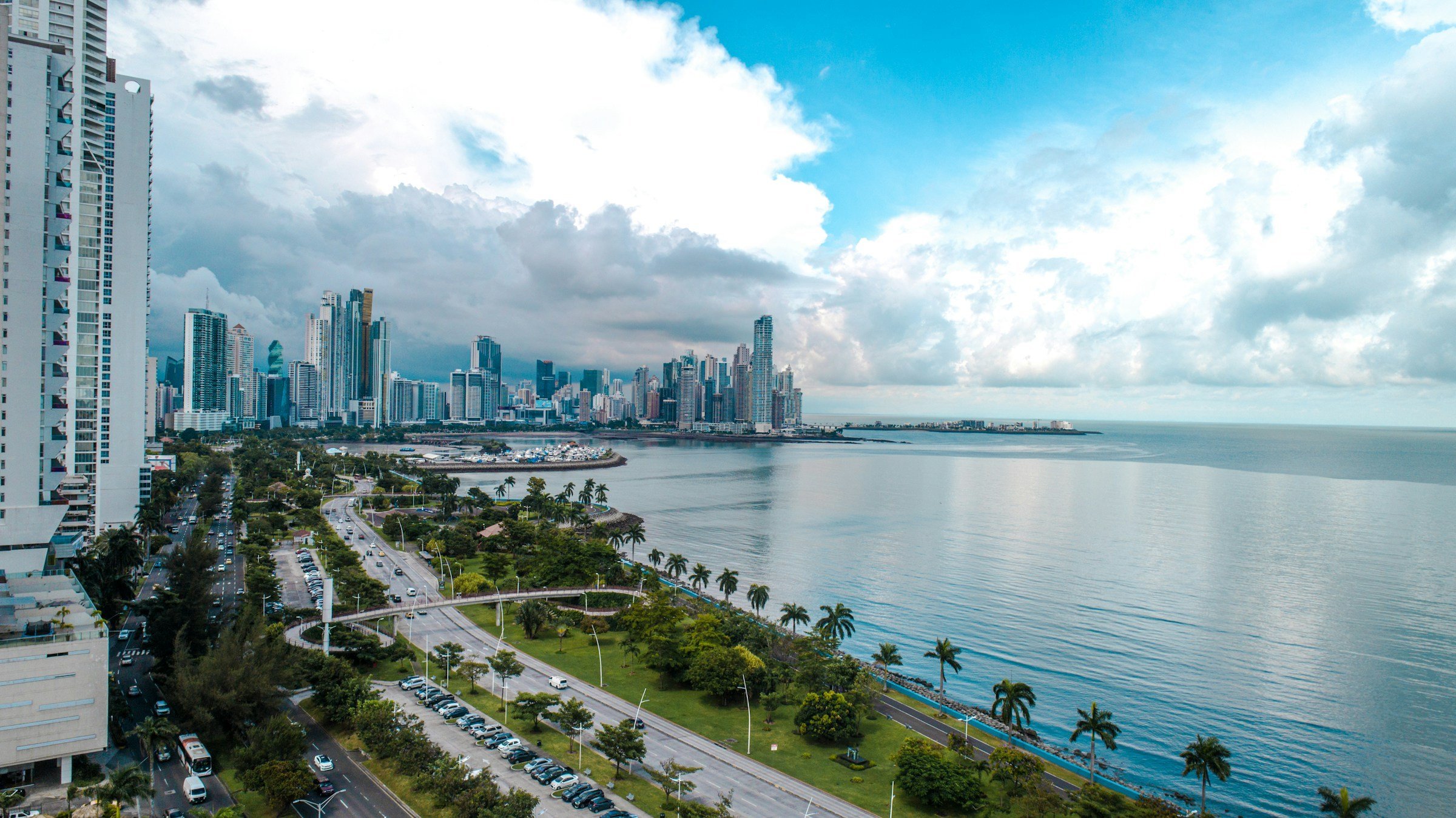
1. The Bridge Splits Old and New
You cross the Bridge of the Americas and the skyline appears all at once. Glass towers thirty, forty stories tall, taller than anything in Central America has a right to be, crowding a narrow spit of land between ocean and bay. They look transplanted. They look like Miami decided to visit and never left. This is Punta Paitilla, Punta Pacifica, the banking district, the condo towers where a one-bedroom goes for $350,000 and the lobby staff speak English by default. The money came from the canal. American engineers dug it, American servicemen spent their paychecks here for eighty years, and when the handover happened in 1999, Panamanian banks kept the offshore accounts humming. The skyline is proof that a shipping lane can birth a financial center.

Fifteen minutes away in Casco Viejo, the buildings are three stories, pastel, crumbling at the edges. Balconies sag. Laundry hangs over cobblestones the Spanish laid in 1673 after Henry Morgan burned the first city to ash. You can stand in Plaza de la Independencia and see both. The towers shimmer in the distance like a separate country. The old quarter smells like empanadas frying in storefronts that double as someone’s living room. Gentrification is halfway through. A boutique hotel charges $280 a night next to a corner store selling cigarettes one at a time for fifty cents. The contrast is not charming. It is the same story the canal tells: money flows to whoever controls the crossing, and everyone else watches.
2. Causeway at Dusk, Runners and Pelicans
The Amador Causeway stretches three kilometers into the Pacific, built from rocks the Americans blasted out of Culebra Cut. It is the city’s favorite running path. At dusk the pavement fills with joggers, cyclists, couples walking dogs that cost more than a month’s rent. To your left, container ships stack up in rows, waiting their turn at the locks. To your right, the skyline glows pink, then orange, then the lights blink on floor by floor. Pelicans dive near the rocks. Food carts sell raspados, shaved ice doused in condensed milk and artificial strawberry syrup, for $2.
The causeway connects three small islands. The last one, Isla Flamenco, has a marina where sportfishing boats tie up next to yachts with Cayman Island registries. A restaurant at the end serves corvina, the local sea bass, grilled with garlic and lime, for $18. The fish is good. The view is better. You watch ships slide past, hulking and silent, and it is impossible not to think about the fact that 6% of global trade squeezes through a channel fifty meters wide at its narrowest point, and Panama takes a cut of every single passage.
3. Albrook Mall and the Myth of Cheap Goods

Panama City
Albrook Mall sits next to the domestic airport and the long-distance bus terminal, seven hundred stores under one roof, the largest mall in Latin America by some measures. Tourists arrive expecting duty-free prices. Panama has no sales tax, the story goes, so electronics and brand-name clothes should cost less. The truth is narrower. Cameras, laptops, and iPhones sometimes run 10% cheaper than in the States. Most everything else is the same price or higher. A Zara dress costs $60 here and $55 in Texas. Nikes are $90. The food court has a Subway, a Popeyes, a Johnny Rockets. You could be in Tampa.
The real reason people come is air conditioning and the promise of American order. The mall is spotless. Security guards in pressed shirts stand at every entrance. Families walk laps. The chaos of Avenida Central, the open-air market street downtown where vendors shout and knock-off perfume costs $8, is only three kilometers away but feels like a different climate zone. Albrook is where the middle class spends Sundays. It is a monument to the idea that proximity to the canal makes you part of the first world, even if the bus that brought you here has no seatbelts and stops every two blocks.
4. Cinta Costera and the Jogger’s View of Inequality
The Cinta Costera is a waterfront highway wrapped in a jogging path, six lanes of traffic on one side and the bay on the other. The path runs eight kilometers from Casco Viejo to Punta Paitilla. It cost $189 million, most of it poured during the commodities boom when the canal expansion was underway and the government had cash to spend on things like promenades. You can run the whole length without crossing a street. Mango vendors set up carts at kilometer markers. Families grill on the grass strips. It is pleasant.
What strikes you is how the skyline crowds closer the farther you run. In Casco Viejo, the towers are background, distant. By the time you reach the banking district, they loom directly overhead, glass walls reflecting your face as you pass. At the base of one, a doorman in a suit stands under a porte-cochère. Half a block away, a man sleeps on cardboard next to a fence. The canal made room for both. American money built the towers. Caribbean hustle fills the gaps. The joggers do not stop. The view is too good.
5. Miraflores Locks and the Eight-Dollar船
The Miraflores Visitor Center charges $17.50 for adults, $7.50 for kids, and offers a fourth-floor observation deck where you watch ships rise and fall in chambers the size of football fields. The locks operate like elevators. A container ship from Shanghai enters the first chamber, the gates close, water pumps in, and the ship lifts twenty-seven feet in eight minutes. Then the next chamber, another lift, until the ship reaches Gatun Lake, twenty-six meters above sea level. The engineering is a century old. It still works.
What the brochures do not mention is that you can see the same thing for free from the road outside, though the angle is worse and there is no cafe selling $6 sandwiches. Most locals skip the center entirely. They know the real cost is not the ticket but the realization that the entire city exists because someone decided this was the narrowest spot to connect two oceans. The Spanish tried in the 1500s and failed. The French tried in the 1880s and went bankrupt. The Americans finished it in 1914 and ran it like a private club for eighty-five years. Panama got it back and doubled the revenue by adding bigger locks. Every ship that passes pays a toll based on weight. The average fee is $150,000. On a busy day, forty ships transit. You do the math.
If you liked this, you might like: Cusco, Playa del Carmen, Antigua.
Planning the trip? Compare hotel deals before you book.