The Rive Gauche was radical before it was expensive
The Left Bank spent two centuries as the place aristocrats avoided. Students lived there. Philosophers argued in unheated rooms. Writers drank because rent was cheap and the police didn’t care. Now a studio in the 6th arrondissement costs what a banker makes, but the streets still angle wrong, the cafes still have scarred wooden tables, and if you walk from Odéon to the Panthéon at the right hour you can see exactly why Sartre never crossed to the north side unless someone paid him.
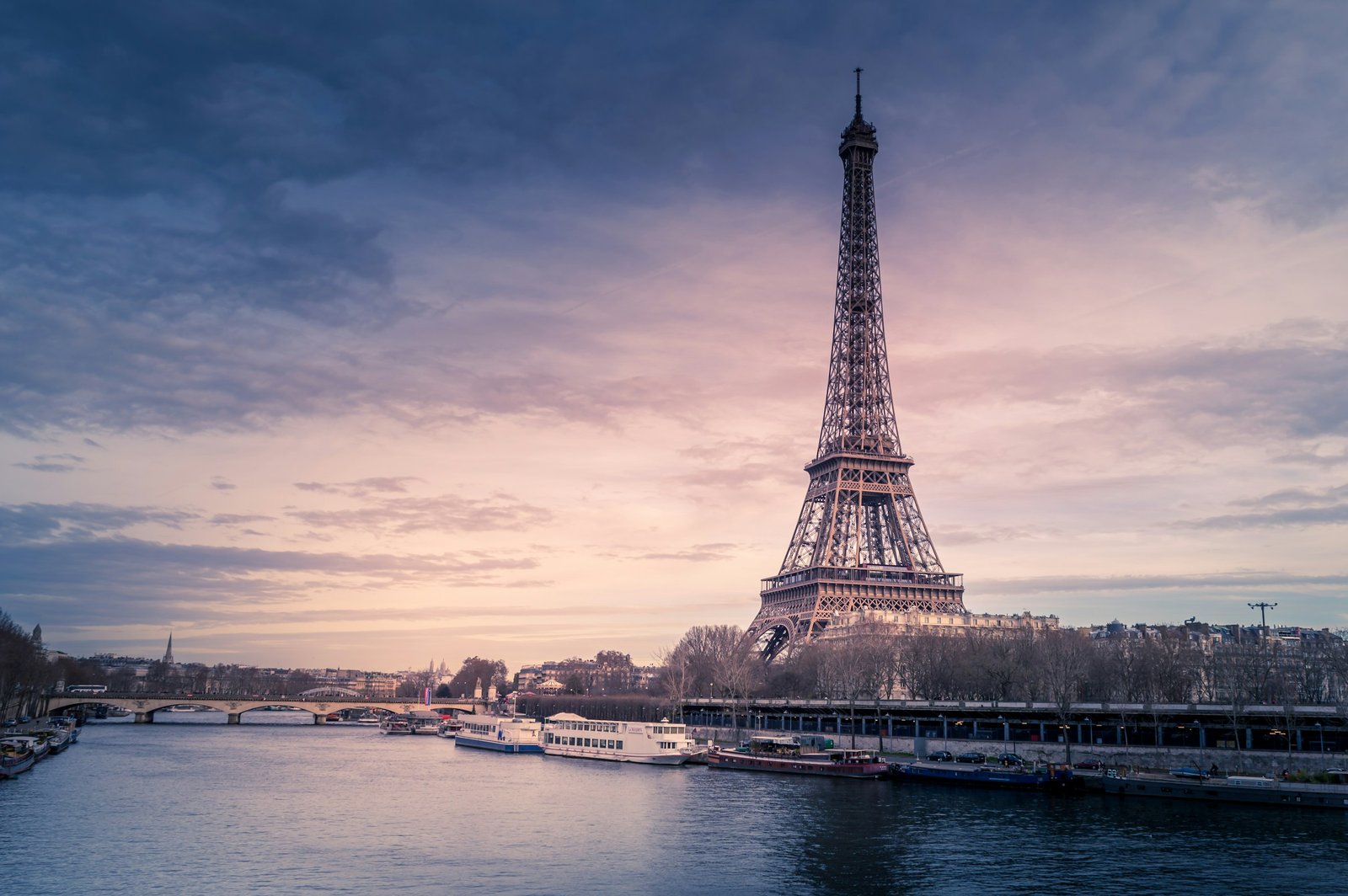
Paris, Eiffel Tower, Paris France
The thing nobody tells you is that the symmetry the city is famous for stops at the river. Haussmann gutted the Right Bank in the 1860s and built those wide perfect boulevards that make Paris look like a stage set. The Left Bank kept its medieval tangle. Rue de la Huchette is four feet wide in places. The street plan near Saint-Michel predates the printing press. You navigate by landmark, not grid, and it still feels like territory the authorities gave up on.
Stay in the 5th or 6th if you want to understand why the city works the way it does. The hotels are smaller. Many are still family-run. You’ll pay €140-180 per night for a double room the size of a parking space, but you’ll be a ten-minute walk from the Seine and you won’t spend your mornings on the metro.
Symmetry on the Right Bank comes with a bill
The 1st and 8th arrondissements are where the city performs for tourists. The Louvre. The Champs-Élysées. That golden dome at Les Invalides. Everything lines up. The sight lines were engineered so you’d stand at the Arc de Triomphe and see straight down to the Louvre’s courtyard, and it works, and it’s impressive, and after two days it starts to feel like a museum you’re living inside.
Hotels here run €250-400 for anything decent. You’re paying for location and the fact that the concierge speaks six languages. Breakfast costs €25 and comes on a tray with a carnation. The streets are clean. The metro stops are frequent. You will see more selfie sticks than locals buying bread.
I stayed near Place Vendôme once because someone else was paying. The room had crown molding and a view of a courtyard where nothing ever happened. I walked twenty minutes to find a cafe that wasn’t performing Frenchness for an audience. The Right Bank works if you’re here for three days, have money, and want to see the things you’ve seen in pictures. It does not work if you want to eat dinner after 9pm without a reservation or find a bar where the bartender doesn’t assume you need the menu explained.
Montmartre kept its hills when the rest got flattened
The 18th arrondissement sits on the only real elevation in central Paris, and the old stone steps between Abbesses and Sacré-Cœur feel like a different city. Montmartre was a separate village until 1860. Windmills. Vineyards. Cheap wine. Artists moved there because rent was low and the light was good on the northern slopes. Utrillo painted the streets. Picasso had a studio in the Bateau-Lavoir before he could afford Montparnasse.
Now it’s half tourist trap and half residential. Place du Tertre is a nightmare of caricature artists and overpriced crêpes. Walk three blocks east and you’ll find bakeries with lines of locals and wine bars that don’t have English menus. Hotels run €100-160. The rooms are small and the plumbing is old but you’re on a hill in a neighborhood that still has a street market twice a week.
The metro ride to central Paris takes twenty-five minutes. You will climb stairs. The Sacré-Cœur stairs don’t have an escalator option and by the time you’re halfway up you’ll understand why Toulouse-Lautrec drank so much.
The Marais remembers being Jewish and gay before being boutique
The 4th arrondissement was the Jewish quarter when the rest of the city wanted Jews somewhere specific. Then it was the gay quarter when being gay meant living somewhere the cops didn’t patrol. Now it’s boutique hotels and vintage clothing stores, but the falafel shops on Rue des Rosiers are still better than anything in the 8th and the bars on Rue Vieille du Temple still don’t care what you look like.
This is the part of the Right Bank that doesn’t feel like Haussmann won. The streets curve. Buildings lean. You can walk from the Seine to République without seeing the same cafe twice. Hotels cost €160-220 and the rooms are tight but you’re in a neighborhood with actual hours, where shops close for lunch and reopen when they feel like it.
Sunday afternoon near Place des Vosges is when you see how the Marais works now. Families. Tourists. People who’ve lived here since before rent was a problem. The symmetry of the square is perfect, red brick and white stone, but the cafes spilling onto the arcades ignore the geometry and set up tables wherever they fit.
Belleville climbs east and the rent hasn’t caught up yet
The 20th arrondissement is where Paris admits it’s not all limestone and iron balconies. North African groceries. Chinese restaurants that close at odd hours. Buildings that look like they survived a war because they did. Belleville has the best view of the city from Parc de Belleville, and nobody’s there except locals walking dogs and teenagers avoiding home.
You can still find hotels under €100. The breakfast is instant coffee and a packaged croissant. The elevator fits one person if they’re not wearing a backpack. You’re a thirty-minute metro ride from Notre-Dame and the neighborhood around you is the one Parisians under forty can still afford.
This is not where you stay if you want to be near the Eiffel Tower. This is where you stay if you’ve been to Paris twice already and you’re tired of performing tourist. The parks are real. The markets sell vegetables, not lavender sachets. The graffiti is political and nobody’s cleaned it off yet.
Cheap flights depend on which awkward airport you’ll tolerate
Paris has three airports and two of them are bad. Charles de Gaulle is the hub, forty minutes north by RER train, and it’s the airport every airline uses for long-haul. You’ll pay less flying into CDG than Orly, but you’ll also stand in a passport line that moves like the French government is personally reviewing your life.
Orly is closer, twenty-five minutes south, and it handles budget European carriers. If you’re flying from London or Barcelona, check Orly first. The train connections are worse but the airport is half the size and you’ll be in Paris faster.
Beauvais is where Ryanair sends you when the fare is €30. It’s not in Paris. It’s an hour north by bus. The bus costs €17. You will do the math and realize the cheap flight wasn’t cheap, but you’ll book it anyway because €47 total is still less than €200.
I’ve flown into all three. Beauvais twice, both times regretting it by the time the bus hit traffic near Porte Maillot. If you’re booking six months out and flexible, you’ll find sub-€100 fares from most European cities into CDG. From the US, east coast directs run $400-700 depending on season. Pack light. The RER trains from CDG have narrow doors and Parisians will not help you with your bag.
Notre-Dame is open again, and it costs nothing
The cathedral reopened on 8 December 2024 after five years of rebuilding. Entry is free. The queue is not, at least in time: book a free slot on the official Notre-Dame site and you walk past the line instead of standing in it.
Day trips from Paris that work by train
You do not need a tour bus for any of these. Each one is a regular train from a Paris station, and each has one closing-day trap.
Versailles. Take RER C to Versailles Château Rive Gauche, then walk about ten minutes to the gates. The palace is shut on Mondays, so a Monday plan ends at a locked fence (Château de Versailles).
Giverny. Trains toward Rouen leave Gare Saint-Lazare for Vernon-Giverny, roughly 45 to 50 minutes. A shuttle meets the trains for €5 each way. Monet’s house and gardens open daily from 1 April to 1 November 2026 and stay closed through winter (Fondation Claude Monet). 2026 is also the centenary of Monet’s death, so book a timed ticket for summer weekends.
Fontainebleau. The Transilien R from Gare de Lyon reaches Fontainebleau-Avon in about 40 minutes, then a local bus covers the last stretch to the château. The château closes on Tuesdays, while the park and gardens stay open and free (Château de Fontainebleau), which makes Tuesday a decent walking day if you skip the interiors.
Versailles is the famous one and the crowded one. Fontainebleau gets you a royal palace with a fraction of the queue.
If you liked this, you might like: Bratislava, Ljubljana, Madrid.